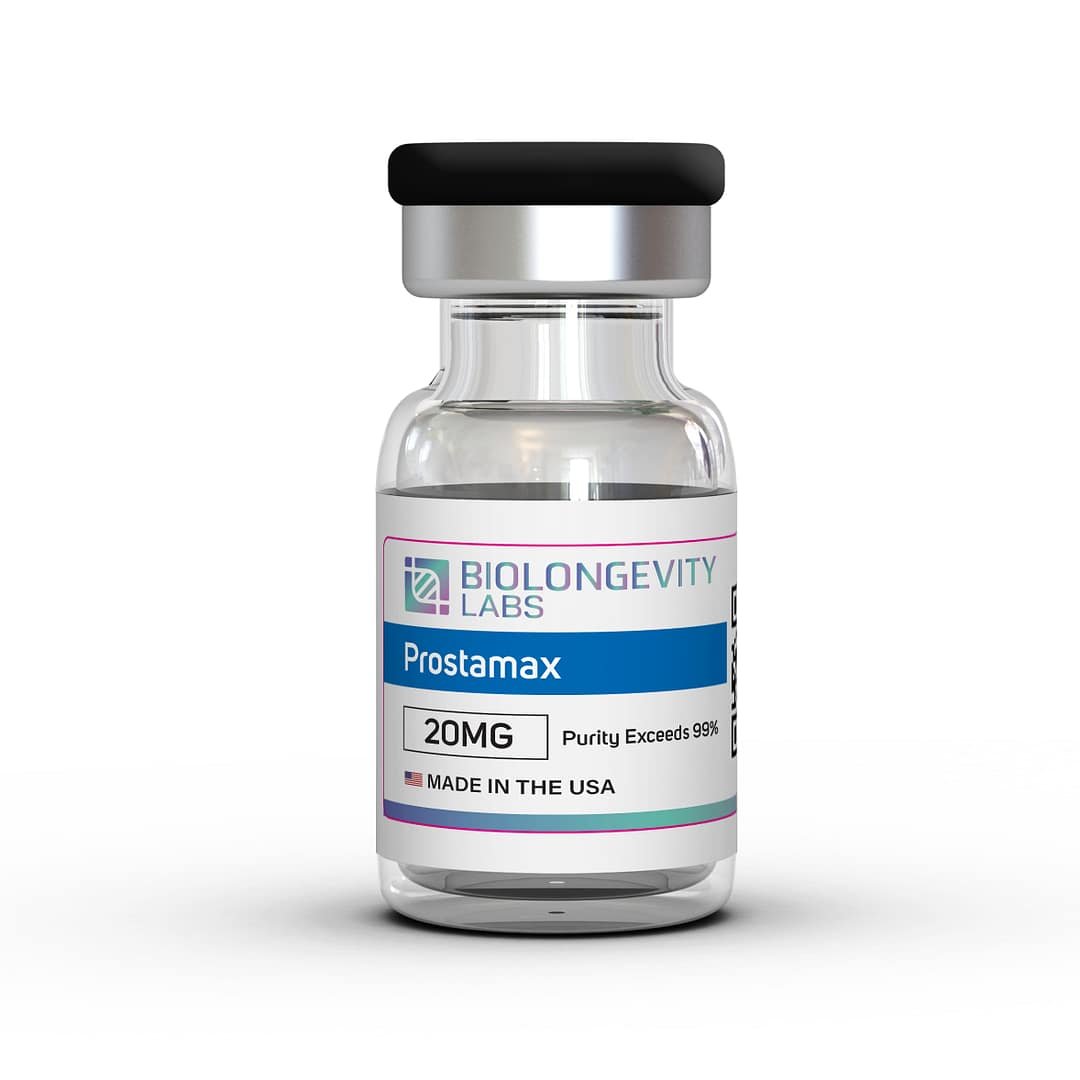
Buy Prostamax Peptide (20mg)
Prostamax Peptide Description
Prostamax is a synthetic tetrapeptide bioregulator that targets cellular mechanisms related to chronic inflammation and DNA condensation processes in research models. Prostamax may demonstrate activity in prostate cell culture studies, offering researchers insights into bioregulatory pathways and cellular function modulation.
Laboratory investigations focus on its effects on chromatin structure and tissue-specific responses in controlled environments. Each batch undergoes rigorous testing to support consistent research outcomes. Lyophilized peptide intended exclusively for in vitro research applications.
Peptide Information
| Property | Value |
|---|---|
| Peptide Sequence | H-Lys-Glu-Asp-Pro-OH |
| Molecular Formula | C₂₀H₃₃N₅O₉ |
| Molecular Weight | 487.5 g/mol |
| PubChem CID | 9848296 |
Prostamax Research
Prostamax (KEDP) has been investigated across multiple research domains, from cellular transport mechanisms to anti-inflammatory pathways in laboratory models. The following studies highlight key findings on this tetrapeptide’s bioregulatory properties and potential applications in controlled research environments.
Cellular Transport and Uptake
Molecular modeling studies reveal that KEDP demonstrates enhanced binding efficiency to LAT1, LAT2, and PEPT1 transporters compared to known substrates of these systems. The peptide’s negatively charged N-terminus and positively charged C-terminus enable efficient cellular uptake through multiple transporter pathways[1].
This sophisticated transport mechanism allows KEDP to reach target tissues where it exerts biological effects through intracellular pathways. The enhanced binding properties suggest optimized cellular delivery for research applications[1].
Anti-Inflammatory Mechanisms
Research in chronic aseptic prostatitis models shows KEDP reduces inflammation markers including tissue swelling, vascular hyperemia, and lymphoid infiltration. The peptide demonstrates superior efficacy compared to conventional prostatotropic agents from Serenoarepens and animal prostate extracts[2].
KEDP prevents the development of sclerotic and atrophic processes that characterize chronic inflammatory conditions. The bioregulator operates through distinct pathways that target underlying pathophysiology rather than merely addressing symptoms[2].
Chromatin Structure Modification
Studies demonstrate that KEDP influences heterochromatin arrangements in human lymphocytes, indicating epigenetic regulatory functions. These chromatin modifications appear to normalize age-related changes in lymphocyte function[3].
The peptide’s ability to modify chromatin structure suggests sophisticated nuclear regulatory mechanisms. Research indicates these epigenetic effects may contribute to KEDP’s broader geroprotective properties[4].
Geroprotective Properties
KEDP demonstrates significant anti-aging mechanisms through chromatin reactivation processes that become diminished with advancing age. The tetrapeptide’s influence on chromatin structure suggests mechanisms for reversing age-related epigenetic changes[5].
Peptide bioregulators like KEDP can normalize age-related cellular function alterations through effects on gene expression and protein synthesis regulation. The geroprotective effects extend to tissue-specific applications where bioregulators maintain cellular homeostasis[6].
Cross-Species Activity
In plant systems, KEDP functions as a phytohormone regulator influencing cell differentiation and growth processes. The tetrapeptide demonstrates antimicrobial properties while regulating plant development responses to external stimuli[7].
The wide range of biological activity across species suggests fundamental cellular regulatory functions conserved across biological systems. This indicates KEDP operates through basic cellular mechanisms involved in growth, differentiation, and stress response pathways.
Tissue Regeneration
KEDP’s bioregulator properties extend to tissue regeneration mechanisms, particularly in preventing atrophic and sclerotic changes. The peptide maintains tissue architecture while promoting repair processes through modulation of inflammatory responses[2].
The prevention of sclerotic changes suggests KEDP interferes with fibrotic pathways that contribute to tissue dysfunction. These tissue-specific effects indicate sophisticated targeting mechanisms that address particular pathological processes while maintaining normal function[2].
References
-
- V. K. Khavinson, N. S. Linkova, A. I. Rudskoy, and M. G. Petukhov, “Feasibility of Transport of 26 Biologically Active Ultrashort Peptides via LAT and PEPT Family Transporters,” MDPI AG, Mar. 2023. doi: 10.3390/biom13030552. https://doi.org/10.3390/biom13030552
- T. G. Borovskaya et al., “Experimental studying of the drug efficiency Prostamax in the therapy of chronic aseptic prostatitis and its complications,” Scientific Research Publishing, Inc., 2013. doi: 10.4236/mri.2013.23007. https://doi.org/10.4236/mri.2013.23007
- T. Meskhi et al., “[The influence of the peptide bioregulator prostamax on heterochromatin of human lymphocytes in situ].,” Biofizika, vol. 49 6, pp. 1091–3, 2004.
- V. Kh. Khavinson, T. A. Lezhava, and V. V. Malinin, “Effects of Short Peptides on Lymphocyte Chromatin in Senile Subjects,” Springer Science and Business Media LLC, Jan. 2004. doi: 10.1023/b:bebm.0000024393.40560.05. https://doi.org/10.1023/b:bebm.0000024393.40560.05
- T. Lezhava, J. Monaselidze, T. Kadotani, N. Dvalishvili, and T. Buadze, “Anti-aging peptide bioregulators induce reactivation of chromatin.,” Georgian medical news, vol. 133, pp. 111–5, 2006.
- N. N. Bedelov, A. K. Iordanishvili, M. E. Malyshev, M. A. Vasiliev, and K. A. Kerimhanov, “Effect of Peptide Bioregulation on the State of Secretory Immunity in the Saliva of Elderly Patients with Chronic Generalized Periodontitis,” Pleiades Publishing Ltd, Apr. 2021. doi: 10.1134/s2079057021020041. https://doi.org/10.1134/s2079057021020041
- V. Khavinson, N. Linkova, A. Diatlova, and and A. Dudkov, “Peptide regulation of plant cells differentiation and growth,” EDP Sciences, 2024. doi: 10.1051/bioconf/20248202003. https://doi.org/10.1051/bioconf/20248202003
Prostamax (20 mg) (11236)

PROSTAMAX (251439)
 ×
×
Disclaimer: For Research Purposes Only
This content is provided strictly for research purposes and does not constitute an endorsement or recommendation for the non-laboratory application or improper handling of peptides designed for research. The information, including discussions about specific peptides and their researched benefits, is presented for informational purposes only and must not be construed as health, clinical, or legal guidance, nor an encouragement for non-research use in humans. Peptides described here are solely for use in structured scientific study by authorized individuals. We advise consulting with research experts, medical practitioners, or legal counsel prior to any decisions about obtaining or utilizing these peptides. The expectation of responsible, ethical utilization of this information for legitimate investigative and scholarly objectives is paramount. This notice is dynamic and governs all provided content on research peptides. . .
Related products