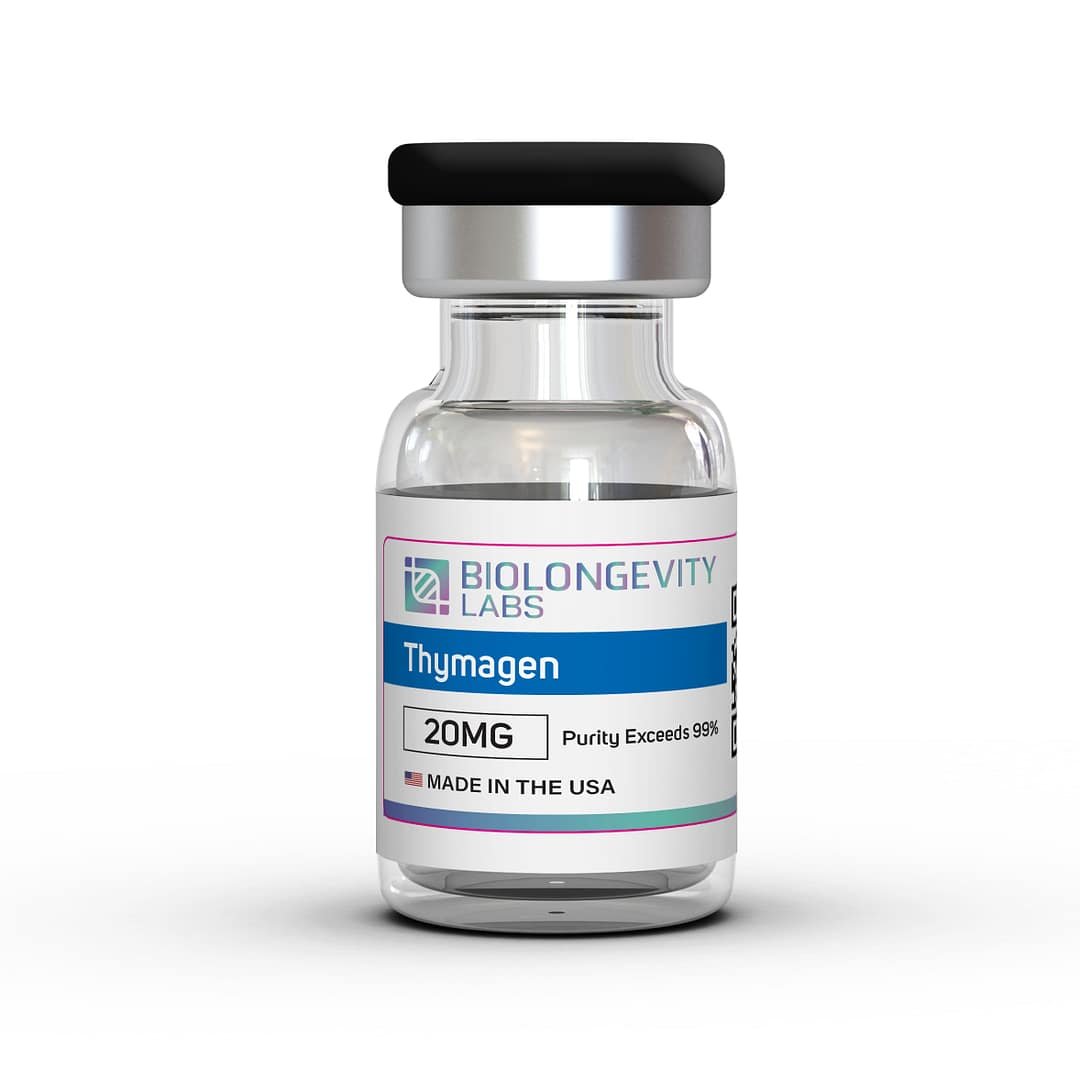
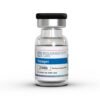
Buy Thymagen (Thymogen) (20mg)
Thymagen (Thymogen) Peptide Description
Thymagen is a synthetic bioregulator peptide (Glu-Trp) originally isolated from thymalin, designed for laboratory research applications. This research-grade peptide enables in vitro studies of thymus-related immunity mechanisms, including T-cell differentiation and cyclic nucleotide balance.
Research demonstrates the effect of thymogen on cAMP and cGMP regulation through phosphodiesterase activity modulation in various models. Laboratory research applications include immunodeficiency studies and immune system regulation analysis. Research use only.
Peptide Information
| Property | Value |
|---|---|
| Peptide Sequence | H-Glu-Trp-OH |
| Molecular Formula | C₁₆H₁₉N₃O₅ |
| Molecular Weight | 333.34 g/mol |
| CAS Number | 38101-59-6 |
| PubChem CID | 100094 |
Research on Thymagen
Scientific literature reveals Thymagen’s complex interactions with immune cells, DNA sequences, and cellular signaling cascades in laboratory models. Research data below supports experimental design for studies investigating immunomodulation, aging, and therapeutic applications in controlled laboratory settings.
Immunomodulatory Functions
Thymagen operates through sophisticated mechanisms that regulate cellular and humoral immunity. The peptide activates TLR and RLR pathways, fundamental components of innate and adaptive immune responses[1].
This activation stimulates the expression of endosomal receptors TLR3, TLR7, TLR8, and TLR9, along with cytoplasmic sensors RIG1 and MDA5. The peptide also enhances critical signaling factors including NFκB1 and MAVS (mitochondrial antiviral signaling protein)[1].
The immunoprotective effects manifest through restoration of T and B lymphocyte populations and their subpopulations[2]. Thymagen demonstrates particular efficacy in stimulating the differentiation of hematopoietic stem cells into mature CD28+ T lymphocytes[3].
Research demonstrates that Thymagen significantly affects cytokine production patterns. In lipopolysaccharide-induced inflammation models, the peptide reduces TNF-α synthesis by approximately five-fold and moderates other pro-inflammatory mediators[3].
This cytokine regulation occurs through the peptide’s ability to interact with specific DNA sequences and influence gene expression patterns related to inflammatory responses[3].
Molecular Mechanisms
Thymagen exhibits selective binding affinity for double-stranded DNA sequences. Molecular modeling studies identify GGAG as the optimal binding site in the classical B-form of DNA[3].
This interaction occurs through the formation of intermolecular hydrogen bonds within the minor groove of the DNA helix. The peptide forms four intermolecular hydrogen bonds with nitrogen atoms at specific guanine and adenine positions.
The peptide’s DNA-binding capability translates into regulation of genes associated with immune function and inflammatory responses. Bioinformatics analysis reveals that Thymagen can potentially regulate 542 genes whose promoters contain the GGAG sequence[3].
Among these targets are critical genes involved in viral pathogenesis, including ACE2, CYSLTR1, AKT1, and AKT2. The mechanism involves epigenetic regulation where Thymagen binding influences chromatin structure and transcription factor accessibility[2].
Cardiovascular and Vascular Research
Thymagen demonstrates significant effects on the renin-angiotensin system through its interaction with ACE2. The peptide reduces angiotensin-induced vasoconstriction and preserves endothelium-dependent vascular relaxation[4].
This mechanism becomes particularly relevant in viral infections where ACE2 serves as a cellular entry point for pathogens like SARS-CoV-2[3].
Studies reveal that Thymagen influences blood coagulation and fibrinolytic activity. The peptide helps normalize plasma fibrinolytic parameters and reduces hypercoagulation states in various pathological conditions[2].
This hemostatic regulation occurs through modulation of tissue factor expression, plasminogen activators, and antithrombin III synthesis.
Cellular Biology and Aging Research
Thymagen promotes cellular differentiation processes, particularly in immune cell populations. The peptide stimulates the expression of CD4 and CD5 molecules on thymic cells, facilitating their differentiation toward T-helper phenotypes[2].
In organotypic culture studies, Thymagen increases the growth zone index of spleen tissue explants by 20-50% and stimulates proliferation while reducing apoptosis by 29-42%[2].
Research demonstrates geroprotective effects of Thymagen in both animal experiments and clinical studies. The peptide contributes to restoration of immune system functions and reduced mortality in elderly populations[2].
These anti-aging effects correlate with the peptide’s ability to regulate telomere length in PHA-stimulated lymphocytes and influence aging-related gene expression. The mechanism involves interaction with histone proteins that affect chromatin conformation and gene accessibility[2].
Respiratory and Viral Defense
Thymagen accumulates in epithelial cells of the human respiratory tract during early embryogenesis. Clinical applications include treatment of acute respiratory diseases, where the peptide reduces disease incidence by 2.0-2.4 times in elderly populations[2].
The peptide’s antiviral properties stem from its ability to activate innate immune responses through TLR/RLR pathways. This activation enhances cellular capacity to detect and respond to viral pathogens[1].
In COVID-19 research, Thymagen demonstrates efficacy in complex therapy protocols. The peptide helps normalize lymphocyte counts and monocyte populations during coronavirus infection[5].
Neurological and Stress Response
Thymagen influences stress response pathways through its effects on the hypothalamic-pituitary-adrenal axis. The peptide helps normalize stress-induced immune dysfunction and supports cellular resistance to various stressors[2].
This stress-protective effect involves regulation of heat shock protein synthesis and cellular stress response genes.
While primarily recognized for immune functions, Thymagen demonstrates indirect neuroprotective effects. The peptide’s anti-inflammatory properties help maintain neurological function during inflammatory states[2].
Tissue Regeneration
Thymagen promotes regeneration processes in various tissues through its effects on cellular proliferation and differentiation. The peptide normalizes regeneration processes when suppressed due to pathological conditions or aging[2].
This regenerative capacity involves stimulation of stem cell differentiation and enhancement of tissue repair mechanisms.
References
- T. M. Sokolova, V. V. Poloskov, A. N. Shuvalov, O. S. Burova, and Z. A. Sokolova, “Signaling TLR/RLR-mechanisms of immunomodulating action of ingavirin and thymogen preparations,” Publishing House ABV Press, Apr. 2019. doi: 10.17650/1726-9784-2019-18-1-60-66. https://doi.org/10.17650/1726-9784-2019-18-1-60-66
- V. Kh. Khavinson, N. S. Linkova, N. I. Chalisova, and O. M. Ivko, “The Use of Thymalin for Immunocorrection and Molecular Aspects of Biological Activity,” Pleiades Publishing Ltd, Jul. 2021. doi: 10.1134/s2079086421040046. https://doi.org/10.1134/s2079086421040046
- N. Linkova et al., “The Influence of KE and EW Dipeptides in the Composition of the Thymalin Drug on Gene Expression and Protein Synthesis Involved in the Pathogenesis of COVID-19,” MDPI AG, Aug. 2023. doi: 10.3390/ijms241713377. https://doi.org/10.3390/ijms241713377
- G. Deplanque et al., “Phase II trial of the antiangiogenic agent IM862 in metastatic renal cell carcinoma,” Springer Science and Business Media LLC, Oct. 2004. doi: 10.1038/sj.bjc.6602126. https://doi.org/10.1038/sj.bjc.6602126
- B. Kuznik et al., “Peptide Drug Thymalin Regulates Immune Status in Severe COVID-19 Older Patients,” Pleiades Publishing Ltd, Oct. 2021. doi: 10.1134/s2079057021040068. https://doi.org/10.1134/s2079057021040068
Thymogen (12086)

Thymogen (12087)

Thymagen (260398)

Thymagen (260266)

Endotoxin Thymagen

Thymagen (11379)

Thymagen (251543)

Thymagen (251543E)
 ×
×
Disclaimer: For Research Purposes Only
This content is provided strictly for research purposes and does not constitute an endorsement or recommendation for the non-laboratory application or improper handling of peptides designed for research. The information, including discussions about specific peptides and their researched benefits, is presented for informational purposes only and must not be construed as health, clinical, or legal guidance, nor an encouragement for non-research use in humans. Peptides described here are solely for use in structured scientific study by authorized individuals. We advise consulting with research experts, medical practitioners, or legal counsel prior to any decisions about obtaining or utilizing these peptides. The expectation of responsible, ethical utilization of this information for legitimate investigative and scholarly objectives is paramount. This notice is dynamic and governs all provided content on research peptides. . .
Related products
Peptides