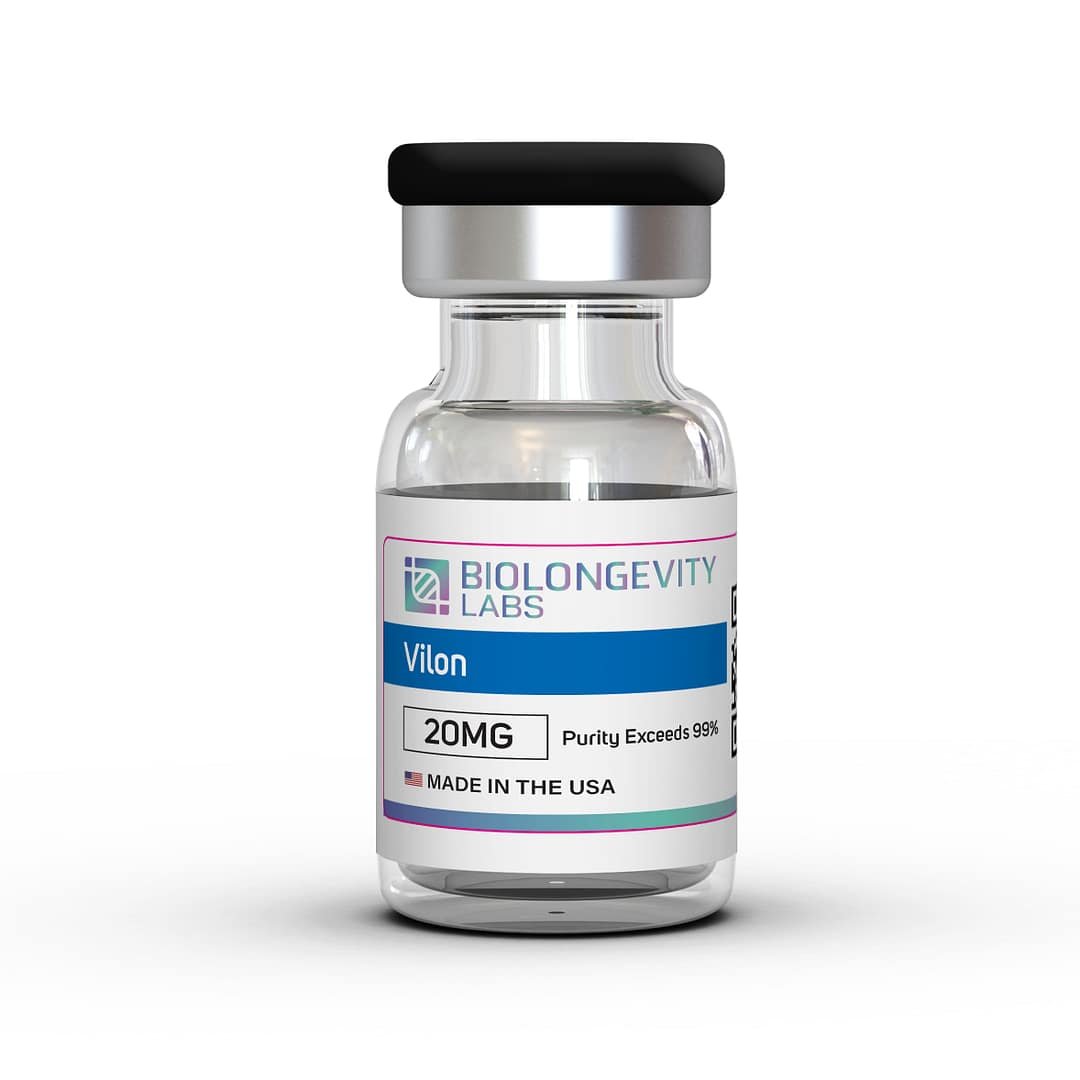
Buy Vilon Peptide (20mg)
Vilon Peptide Description
Vilon is a Khavinson peptide bioregulator that functions as a potent research compound targeting thymus-related immune system pathways. Composed of two amino acids (Lys-Glu), this anti-aging peptide demonstrates measurable effects in laboratory studies. Research indicates Vilon may help modulate lymphocyte responses and heterochromatin organization in vitro.
Studies examining the effect of Vilon show potential applications in tumor research and immune regulation investigations. As one of the shortest active peptide bioregulators, Vilon peptide may provide researchers with insights into cellular aging mechanisms. For research use only.
Peptide Specifications
| Property | Value |
|---|---|
| Peptide Sequence | L-Lys-L-Glu |
| Molecular Formula | C₁₁H₂₁N₃O₅ |
| Molecular Weight | 275.3 g/mol |
| CAS Number | 45234-02-4 |
| PubChem CID | 7010502 |
| Synonyms | Lysylglutamic acid, N-L-Lysyl-L-glutamic acid, H-Lys-Glu-OH, Lysyl glutamate, KE |
Vilon Bioregulator Research
Vilon peptide represents one of the shortest bioactive compounds studied in laboratory research, consisting of just two amino acids (Lys-Glu). Scientific investigations reveal this dipeptide demonstrates measurable effects across multiple cellular pathways in controlled research environments.
Gene Expression Regulation
Laboratory studies show KE peptide binds directly to double-stranded DNA in cell nuclei, specifically targeting GCGC sequences found in 642 gene promoters[1]. This binding mechanism allows the peptide to regulate multiple genes simultaneously in research cell cultures[2].
Research demonstrates the peptide interacts with histone proteins, potentially altering chromatin structure in laboratory conditions. These modifications may influence gene accessibility and transcription factor binding in controlled studies[1].
Immune System Modulation
In vitro experiments reveal Vilon modulates cytokine production in cultured immune cells. The peptide specifically targets the CHUK gene, which encodes components for NF-κB signaling pathway regulation[1].
Laboratory research shows the compound stimulates T-cell differentiation and promotes CD4 and CD5 molecule expression in thymic cell cultures. Studies demonstrate up to 6-fold reduction in inflammatory cytokine synthesis in stimulated cell preparations[2].
Cellular Aging Research
Research indicates Vilon normalizes telomere length in stimulated lymphocyte cultures across different age groups in laboratory conditions. The peptide increases euchromatin proportion while decreasing heterochromatin in aging cell models[2].
Gene expression analysis reveals the compound regulates aging-related genes including IGF1, FOXO1, TERT, and NFκB in mesenchymal stem cell cultures. Laboratory studies show reduced apoptosis markers in aging cell preparations treated with the peptide[2].
Cardiovascular Research Applications
Studies demonstrate Vilon influences ACE2 gene expression, which encodes angiotensin-converting enzyme 2 in cardiovascular research models. The peptide also regulates AKT1 and AKT2 genes linked to cellular survival and angiogenesis pathways[1].
Metabolic and Stress Response Studies
Research shows the peptide affects heat shock protein synthesis and cellular stress response mechanisms in laboratory conditions. The compound influences genes encoding proteins involved in energy production and oxidative stress tolerance[2].
Laboratory investigations reveal Vilon regulates matrix metalloproteinase-9 expression and increases Ki-67 synthesis in cultured fibroblast preparations. These findings suggest potential applications in tissue repair research models[2].
References
- N. Linkova et al., “The Influence of KE and EW Dipeptides in the Composition of the Thymalin Drug on Gene Expression and Protein Synthesis Involved in the Pathogenesis of COVID-19,” MDPI AG, Aug. 2023. doi: 10.3390/ijms241713377. Available: https://doi.org/10.3390/ijms241713377
- V. Kh. Khavinson, N. S. Linkova, N. I. Chalisova, and O. M. Ivko, “The Use of Thymalin for Immunocorrection and Molecular Aspects of Biological Activity,” Pleiades Publishing Ltd, Jul. 2021. doi: 10.1134/s2079086421040046. Available: https://doi.org/10.1134/s2079086421040046
Endotoxin Vilon

Vilon (11352)

Vilon (251536)

Vilon (251536E)
 ×
×
Disclaimer: For Research Purposes Only
This content is provided strictly for research purposes and does not constitute an endorsement or recommendation for the non-laboratory application or improper handling of peptides designed for research. The information, including discussions about specific peptides and their researched benefits, is presented for informational purposes only and must not be construed as health, clinical, or legal guidance, nor an encouragement for non-research use in humans. Peptides described here are solely for use in structured scientific study by authorized individuals. We advise consulting with research experts, medical practitioners, or legal counsel prior to any decisions about obtaining or utilizing these peptides. The expectation of responsible, ethical utilization of this information for legitimate investigative and scholarly objectives is paramount. This notice is dynamic and governs all provided content on research peptides. . .
Related products