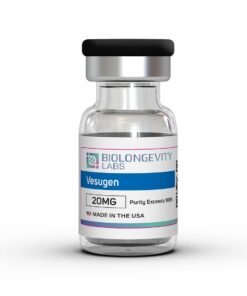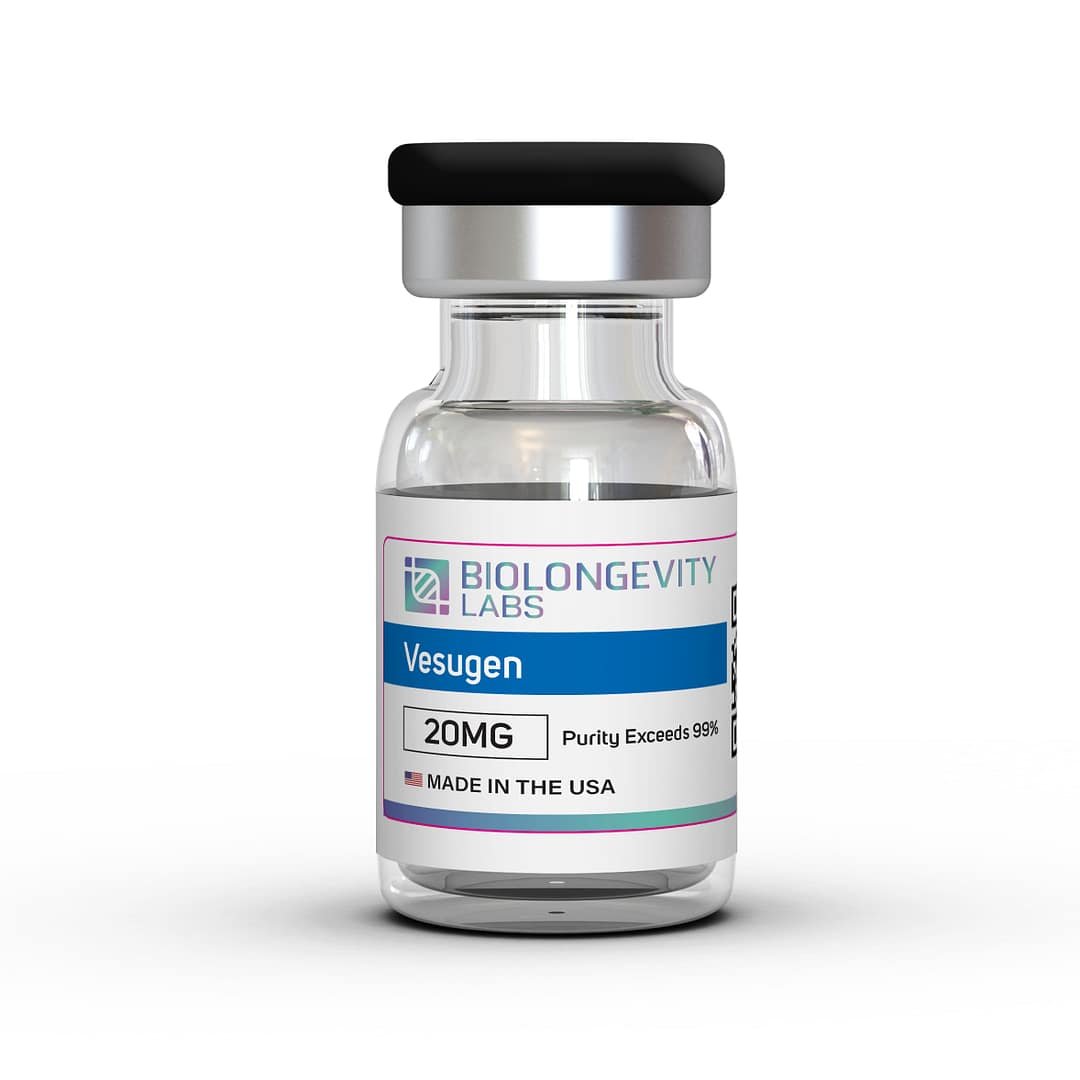
Buy Vesugen Peptide (20mg)
Vesugen Peptide Description
Vesugen is a synthetic tripeptide bioregulator composed of three amino acids: lysine, glutamic acid, and aspartic acid (Lys-Glu-Asp). This Khavinson short peptide serves as a research tool for studying vascular function and cardiovascular system mechanisms. Laboratory studies suggest that Vesugen may influence vascular endothelial cells and blood vessel tissue responses.
Research applications include atherosclerosis studies, metabolic pathway analysis, and central nervous system vascular research. As part of the bioregulatory peptides family, this geroprotective compound enables controlled examination of cellular processes in vascular system research. For research use only.
Peptide Bioregulator Information
| Property | Value |
|---|---|
| Peptide Sequence | H-Lys-Glu-Asp-OH |
| Molecular Formula | C₁₅H₂₆N₄O₈ |
| Molecular Weight | 390.39 g/mol |
| CAS Number | N/A |
| PubChem CID | 87571363 |
Vesugen (Lys-Glu-Asp) Research
Vesugen (Lys-Glu-Asp) has been extensively studied across multiple research domains, with laboratory investigations focusing on its bioregulatory mechanisms in vascular and neurological systems. The following research findings demonstrate the peptide’s documented effects in controlled laboratory environments.
Neurological Research
Laboratory studies show KED peptide promotes dendritic arborization in neuronal cell cultures[1]. Research indicates the peptide increases functional mushroom spines by 20-27% in both in vitro and in vivo neurological models[2].
The peptide works through targeted gene expression modulation rather than general cellular energetics. This precision allows researchers to study specific neuroprotective processes without affecting mitochondrial activity or lysosomal function[1].
Vascular System Research
Vesugen functions as a vasoprotective agent during atherosclerosis and restenosis conditions in laboratory models. The peptide maintains endothelial homeostasis and supports vascular wall integrity through bioregulatory pathways[3].
Research shows the compound regulates endothelial cell proliferation and differentiation in vascular tissue studies. These effects operate through specific peptide-protein interactions that preserve endothelial barrier function[3].
Gene Expression Research
KED peptide belongs to bioregulatory peptides that regulate targeted differentiation of pluripotent cells in laboratory settings[4]. The mechanism involves peptide-DNA interactions that influence gene expression patterns without altering genetic code[5].
Studies show the peptide regulates protein synthesis pathways while maintaining genomic stability. This regulation operates through specific binding interactions with chromatin proteins in controlled research environments[4].
Cellular Research
Research indicates KED peptide protects cells from age-related changes while stimulating regenerative processes in various tissue types. The peptide achieves these effects without altering basic mitochondrial function or cellular energy production[1].
The compound operates within tissue-specific bioregulation frameworks studied in gerontological research. This specificity allows researchers to examine effects primarily in vascular and neuronal tissues with minimal impact on other biological systems[5].
This peptide is intended for laboratory research use only.
References
- N. Kraskovskaya et al., “Short Peptides Protect Fibroblast-Derived Induced Neurons from Age-Related Changes,” MDPI AG, Oct. 2024. doi: 10.3390/ijms252111363. Available: https://doi.org/10.3390/ijms252111363
- G. A. Ryzhak and A. R. Ilina, “Prospects of using peptide drugs for the prevention and treatment of Alzheimer’s disease,” Autonomous non-profit organization-Society of Specialists in the Field Innovative Medical Technology, Feb. 2025. doi: 10.37586/2949-4745-4-2024-223-226. Available: https://doi.org/10.37586/2949-4745-4-2024-223-226
- K. Kozlov et al., “[Molecular aspects of vasoprotective peptide KED activity during atherosclerosis and restenosis].,” Advances in gerontology = Uspekhi gerontologii, vol. 29 4, pp. 646–650, 2016.
- A. V. Arutjunyan, I. G. Popovich, L. S. Kozina, and G. A. Ryzhak, “Peptide Regulation of Ageing: From Experiment to Practice,” Bentham Science Publishers Ltd., Feb. 2025. doi: 10.2174/0118746098346230250116065407. Available: https://doi.org/10.2174/0118746098346230250116065407
- V. Kh. Khavinson, “Peptide medicines: past, present, future,” Medical Informational Agency Publishers, Jul. 2020. doi: 10.30629/0023-2149-2020-98-3-165-177. Available: https://doi.org/10.30629/0023-2149-2020-98-3-165-177
Vesugen (12207)

Endotoxin Vesugen

Vesugen (11371)

Vesugen (251537)

Vesugen (251537E)

Vesugen (251448)
 ×
×
Disclaimer: For Research Purposes Only
This content is provided strictly for research purposes and does not constitute an endorsement or recommendation for the non-laboratory application or improper handling of peptides designed for research. The information, including discussions about specific peptides and their researched benefits, is presented for informational purposes only and must not be construed as health, clinical, or legal guidance, nor an encouragement for non-research use in humans. Peptides described here are solely for use in structured scientific study by authorized individuals. We advise consulting with research experts, medical practitioners, or legal counsel prior to any decisions about obtaining or utilizing these peptides. The expectation of responsible, ethical utilization of this information for legitimate investigative and scholarly objectives is paramount. This notice is dynamic and governs all provided content on research peptides. . .
Related products