BioRestore
$125.98
Advanced Oral Regeneration and Anti-Inflammatory Complex
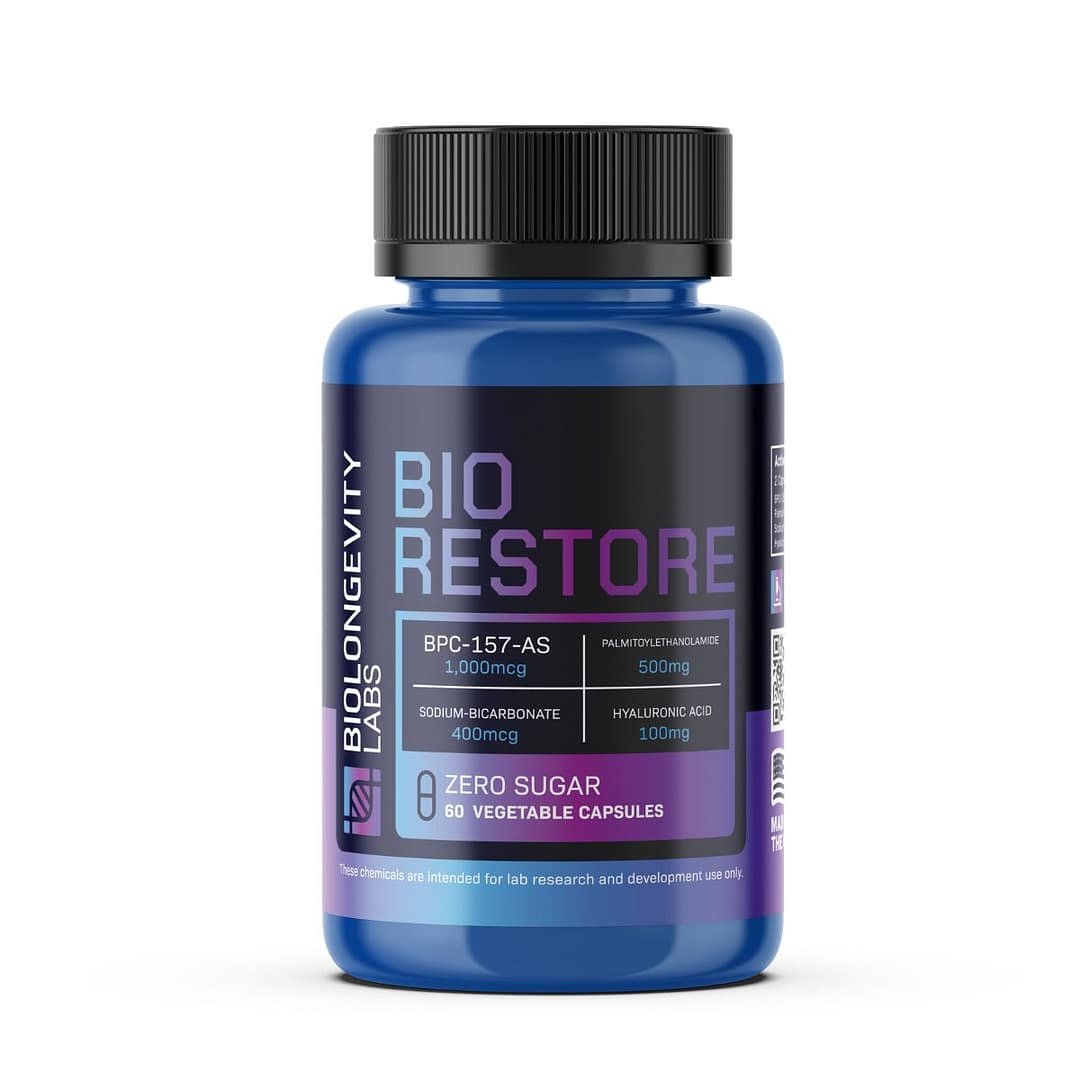
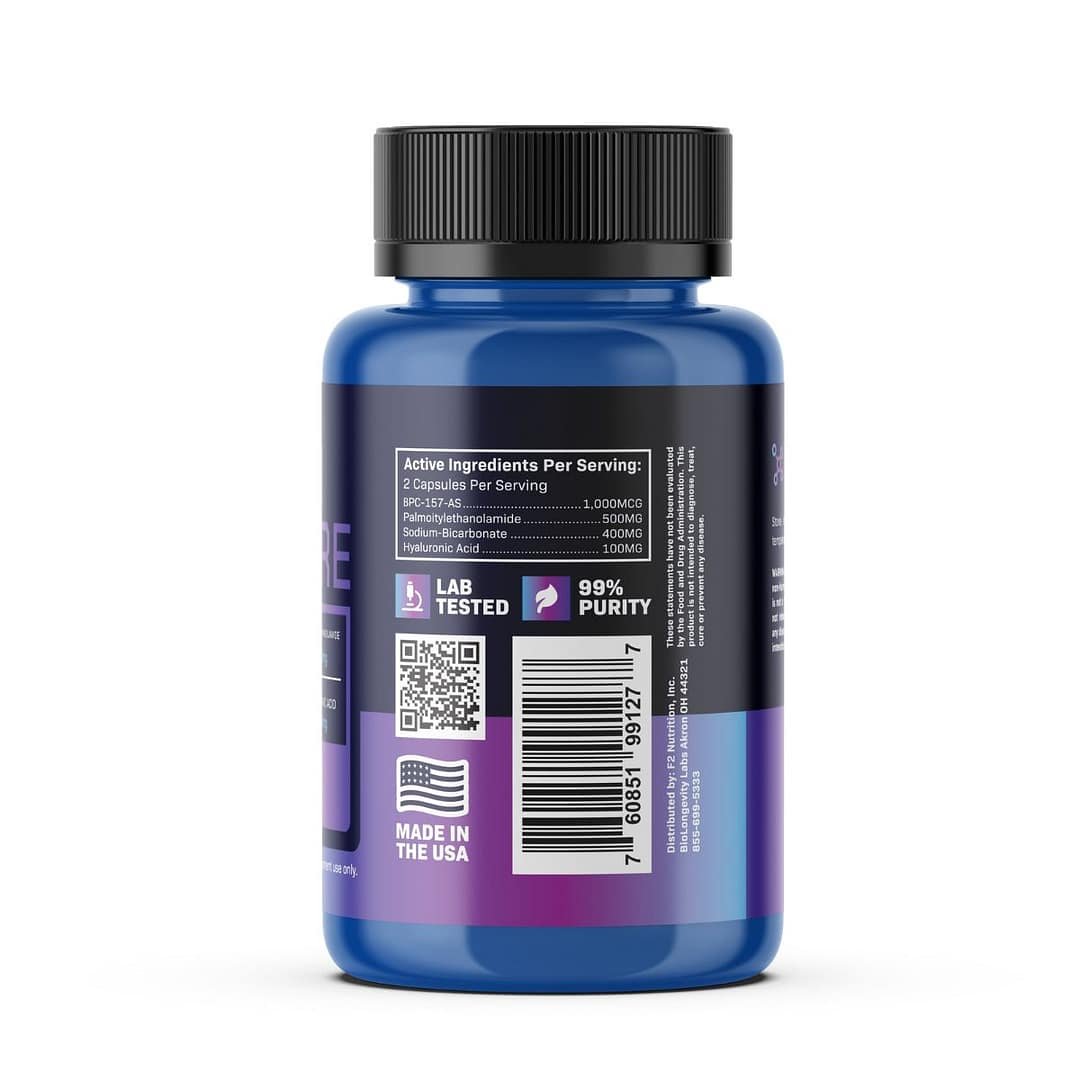
BioRestore is a next-generation regenerative research product formulated to investigate tissue repair, inflammation reduction, and cellular recovery. It contains a synergistic blend of BPC-157 Arginine Salt (1000mcg per serving *), Palmitoylethanolamide (500mg per serving *), Hyaluronic Acid (100mg per serving *), and Sodium Bicarbonate (400mg per serving *) —each carefully selected for its studied role in enhancing recovery, modulating pain, and improving cellular resilience.
* serving size = 2 capsules
BioRestore is designed as a possible complement to traditional peptide and established regenerative therapies, potentially offering a comprehensive approach to healing and inflammation control.
Buy BioRestore
What Is BioRestore?
BioRestore is a first-of-its-kind research product that combines four powerful bioactive compounds to help investigate recovery and systemic healing in preclinical models:
- BPC-157 Arginine Salt (1000mcg per serving *) – A synthetic peptide with potent healing properties, known for its ability to accelerate tissue repair, protect the gut lining, and reduce inflammation in animal studies.
- Palmitoylethanolamide (PEA) (500mg per serving *) – A natural fatty acid amide that modulates pain and inflammation through the endocannabinoid system, potentially offering potent neuroprotective and analgesic effects.
- Hyaluronic Acid (100mg per serving *) – A key structural component of connective tissue that may support joint lubrication, cartilage regeneration, and skin hydration.
- Sodium Bicarbonate (400mg per serving *) – A metabolic alkalizer that buffers acidity, enhances nutrient absorption, and optimizes cellular pH, creating an ideal environment for healing and repair.
* serving size = 2 capsules
Together, these compounds provide an unparalleled research opportunity to study tissue regeneration, pain modulation, and systemic inflammation control.
BioRestore Research Compounds and Mechanisms
- BPC-157 Arginine Salt
BPC-157 is a synthetic peptide derived from body protection compounds, naturally found in gastric juice. It has been extensively studied for its role in tissue repair and anti-inflammatory activity.
- Accelerates wound healing by promoting angiogenesis and fibroblast activation.
- Protects and repairs the gut lining, which may make it beneficial for conditions such as gastritis, leaky gut, and ulcerative colitis.
- Reduces inflammation and oxidative stress, supporting recovery from injuries and metabolic stress.
- Enhances musculoskeletal healing, making it ideal for studying joint, tendon, and ligament repair within in vivo and in vitro models.
Studies suggest BPC-157 enhances the body’s innate repair mechanisms, making it a promising compound for research into chronic injuries and systemic inflammation.
- Palmitoylethanolamide (PEA)
PEA is an endogenous fatty acid amide with potent neuroprotective and anti-inflammatory properties. It modulates the endocannabinoid system, thereby showing promise as a powerful pain reliever and inflammation regulator.
- Activates PPAR-α receptors to control neuroinflammation and pain signaling.
- Reduces mast cell overactivation, which contributes to chronic pain and autoimmune responses.
- Supports nerve repair and neuroprotection, making it valuable in research on neuropathic pain and neurodegenerative conditions.
- Enhances endogenous cannabinoid function, allowing for improved pain tolerance and recovery.
PEA’s ability to reduce pain and inflammation without harmful side effects makes it a useful research compound for studying alternative pain management therapies.
- Hyaluronic Acid
Hyaluronic Acid is a naturally occurring glycosaminoglycan that plays a critical role in joint lubrication, skin hydration, and connective tissue resilience.
- Supports joint health and cartilage regeneration, thereby carrying implications for pain reduction.
- May enhance skin hydration and elasticity, improving extracellular matrix function.
- Promotes synovial fluid production, which could lead to smoother joint movement and cushioning.
- Accelerates post-injury tissue repair, making it beneficial for recovery research.
Studies suggest that oral hyaluronic acid supplementation can increase systemic hydration and improve tissue resilience, making it an ideal co-factor for regenerative therapies.
- Sodium Bicarbonate
Sodium Bicarbonate is a metabolic buffer that helps regulate acidity, optimize nutrient absorption, and enhance recovery from metabolic stress.
- Buffers lactic acid, reducing exercise-induced fatigue and improving endurance.
- Optimizes cellular pH, ensuring optimal enzymatic function and repair processes.
- Enhances nutrient absorption, increasing the bioavailability of other active ingredients.
- Supports gut health, counteracting acidosis and reducing inflammation.
By creating a favorable pH environment for healing, sodium bicarbonate plays a critical role in enhancing the systemic effects of BioRestore.
BPC-157, PEA, Hyaluronic Acid, and Sodium Bicarbonate Synergy
BioRestore contains four complementary bioactive compounds that work synergistically to enhance recovery, reduce pain, and optimize cellular function. In preclinical models and animal studies:
- BPC-157 accelerates healing and tissue regeneration at the cellular level.
- PEA reduces inflammation and modulates pain, supporting long-term recovery.
- Hyaluronic Acid enhances hydration, joint function, and extracellular matrix stability.
- Sodium Bicarbonate optimizes cellular pH and nutrient absorption, improving systemic resilience.
Together, these compounds create an ideal research model for studying systemic healing, anti-inflammatory pathways, and regenerative medicine applications.
Molecular Structure and Data
BPC-157 Arginine Salt
- Molecular Formula: C₆₂H₉₈N₁₆O₂₂
- CAS Number: 137525-51-0
- Molecular Weight: 1419.54 g/mol
Palmitoylethanolamide (PEA)
- Molecular Formula: C₁₈H₃₇NO₂
- CAS Number: 544-31-0
- Molecular Weight: 299.49 g/mol
Hyaluronic Acid
- Molecular Formula: (C₁₄H₂₁NO₁₁)n
- CAS Number: 9004-61-9
- Molecular Weight: Variable
Sodium Bicarbonate
- Molecular Formula: NaHCO₃
- CAS Number: 144-55-8
- Molecular Weight: 84.01 g/mol
BPC-157 Arginine Salt and Tissue Regeneration
BPC-157 is a synthetic peptide with powerful healing and regenerative properties. It plays a crucial role in accelerating tissue repair, reducing inflammation, and protecting the gastrointestinal lining. Studies suggest that BPC-157 modulates angiogenesis (blood vessel formation), enhances fibroblast activation, and promotes extracellular matrix remodeling [1].
- Research indicates BPC-157 enhances collagen synthesis, leading to faster wound healing and musculoskeletal recovery [2].
- In preclinical models, BPC-157 has been shown to protect the gastric mucosa and support gut barrier integrity, making it a candidate for studying gastrointestinal repair mechanisms [3].
- BPC-157 reduces inflammatory cytokines, offering potential applications in chronic injury recovery and inflammatory conditions [4].
Palmitoylethanolamide (PEA) and Neuroinflammation Modulation
Palmitoylethanolamide (PEA) is an endogenous fatty acid amide that interacts with the endocannabinoid system to regulate pain, inflammation, and neuroprotection. It has been widely studied for its ability to modulate mast cell activity, reduce oxidative stress, and enhance neuroplasticity [5].
- Research shows PEA inhibits mast cell degranulation, effectively reducing neuroinflammation and chronic pain signaling [6].
- PEA activates PPAR-α receptors, which play a critical role in modulating immune responses and controlling metabolic inflammation [7].
- In experimental models, PEA has demonstrated analgesic properties, reducing neuropathic pain and inflammation without central nervous system side effects [8].
Hyaluronic Acid and Extracellular Matrix Integrity
Hyaluronic Acid is a glycosaminoglycan that serves as a key structural component in connective tissues, joints, and skin. It plays a critical role in maintaining hydration, reducing friction, and supporting tissue elasticity [9].
- Research demonstrates oral hyaluronic acid supplementation increases synovial fluid viscosity, improving joint lubrication and cartilage protection [10].
- Studies suggest hyaluronic acid enhances fibroblast activity, promoting collagen synthesis and wound healing [11].
- In animal models, hyaluronic acid has shown promise in reducing osteoarthritis progression and improving joint mobility [12].
Sodium Bicarbonate and pH Regulation
Sodium Bicarbonate is a metabolic buffer that plays a key role in regulating acid-base balance, optimizing enzyme function, and improving nutrient absorption. It is frequently used in sports performance research due to its ability to buffer lactic acid and delay muscular fatigue [13].
-
- Sodium bicarbonate increases blood pH, reducing metabolic acidosis and enhancing recovery from high-intensity physical stress [14].
- Studies show that sodium bicarbonate enhances nutrient bioavailability, particularly for amino acids and peptides involved in tissue regeneration [15].
- In experimental models, sodium bicarbonate has demonstrated anti-inflammatory effects, reducing oxidative stress markers associated with metabolic dysfunction [16].
Synergistic Effects of BPC-157, PEA, Hyaluronic Acid, and Sodium Bicarbonate
BioRestore’s unique formulation combines BPC-157’s regenerative properties, PEA’s inflammation modulation, Hyaluronic Acid’s structural support, and Sodium Bicarbonate’s metabolic buffering, creating an optimized research model for healing, recovery, and cellular adaptation.
- BPC-157 accelerates tissue repair, while PEA reduces neuroinflammation, offering a dual-action approach to injury recovery [17].
- Hyaluronic Acid improves extracellular matrix integrity, while Sodium Bicarbonate optimizes cellular pH, enhancing joint function and metabolic resilience [18].
Referenced Citations
- Sikiric P, Seiwerth S, Rucman R, et al. BPC 157, stable gastric pentadecapeptide, therapy of different gastrointestinal tract lesions. Curr Pharm Des. 2013;19(1):112–117.
- Knezevic M, et al. Effective therapy of transected Achilles tendon in rat: BPC 157. J Physiol Paris. 2013;107(5):448-458.
- Sikiric P, Seiwerth S, Brcic L, et al. BPC 157 is stable in human gastric juice and has a beneficial effect on stress-induced lesions in rat stomach. Dig Dis Sci. 2010;55(11):3157-3167.
- Sikiric P, Rucman R, Seiwerth S, et al. Stable Gastric Pentadecapeptide BPC 157: novel therapy in gastrointestinal tract. Curr Pharm Des. 2011;17(16):1612-1632.
- Keppel Hesselink JM, et al. Palmitoylethanolamide, a pleiotropic anti-inflammatory agent that reduces multiple inflammatory pathways. J Pain Res. 2013;6:605–614.
- Petrosino S, Iuvone T, Di Marzo V. N-palmitoyl-ethanolamine: Biochemistry and new therapeutic opportunities. Biochimie. 2010;92(6):724-727.
- D’Agostino G, La Rana G, Russo R, et al. PPAR-α mediates the anti-inflammatory actions of palmitoylethanolamide in the bladder. Br J Pharmacol. 2009;157(7):1254-1261.
- Hesselink JM, et al. Palmitoylethanolamide in the treatment of chronic pain caused by different etiopathogenesis. Pain Physician. 2012;15:ES6-ES7.
- Fraser JR, Laurent TC, Laurent UB. Hyaluronan: its nature, distribution, functions and turnover. J Intern Med. 1997;242(1):27-33.
- Oe M, et al. Oral hyaluronan relieves knee pain: a review. Nutr J. 2016;15:11.
- Chen WY, Abatangelo G. Hyaluronic acid: Chemistry, biocompatibility, and delivery for tissue engineering. Adv Drug Deliv Rev. 1999;31(3):233-248.
- Maheu E, Rannou F. Hyaluronic acid and its use as a ‘therapeutic lubricant’ in osteoarthritis. Ann Rheum Dis. 2010;69(8):1354-1356.
- Peart DJ, Siegler JC, Vince RV. Practical Recommendations for Coaches and Athletes: A Meta-Analysis of Sodium Bicarbonate Use for Athletic Performance. J Strength Cond Res. 2012;26(7):1975-1983.
- McNaughton LR, Siegler J, Midgley AW. Ergogenic effects of sodium bicarbonate. Curr Sports Med Rep. 2008;7(4):230-236.
- Buehlmeier J, et al. A Randomized Controlled Trial on the Effects of Quick and Slow Alkalinization on Time to Exhaustion in Man. Nutrients. 2020;12(11):3466.
- Chen L, et al. Oral sodium bicarbonate reduces progression of CKD and improves nutritional status. J Am Soc Nephrol. 2009;20(9):2075-2084.
- Sikiric P, et al. Stable Gastric Pentadecapeptide BPC 157: novel therapy in gastrointestinal tract. Curr Pharm Des. 2011;17(16):1612-1632; and Keppel Hesselink JM, et al. J Pain Res. 2013;6:605–614.
- Oe M, et al. Oral hyaluronan relieves knee pain: a review. Nutr J. 2016;15:11; and McNaughton LR, Siegler J, Midgley AW. Curr Sports Med Rep. 2008;7(4):230-236.
BioRestore
 ×
×
Disclaimer: For Research Purposes Only
This content is provided strictly for research purposes and does not constitute an endorsement or recommendation for the non-laboratory application or improper handling of peptides designed for research. The information, including discussions about specific peptides and their researched benefits, is presented for informational purposes only and must not be construed as health, clinical, or legal guidance, nor an encouragement for non-research use in humans. Peptides described here are solely for use in structured scientific study by authorized individuals. We advise consulting with research experts, medical practitioners, or legal counsel prior to any decisions about obtaining or utilizing these peptides. The expectation of responsible, ethical utilization of this information for legitimate investigative and scholarly objectives is paramount. This notice is dynamic and governs all provided content on research peptides. . .
Related products
Peptide Capsules