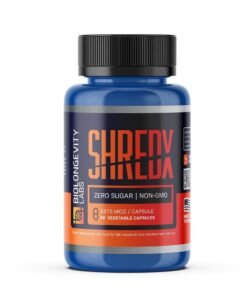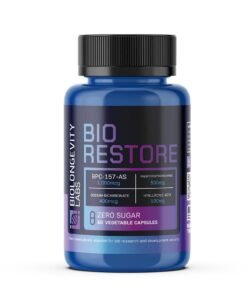
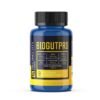
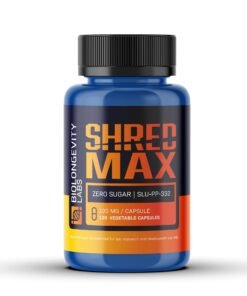
Buy BioFlow
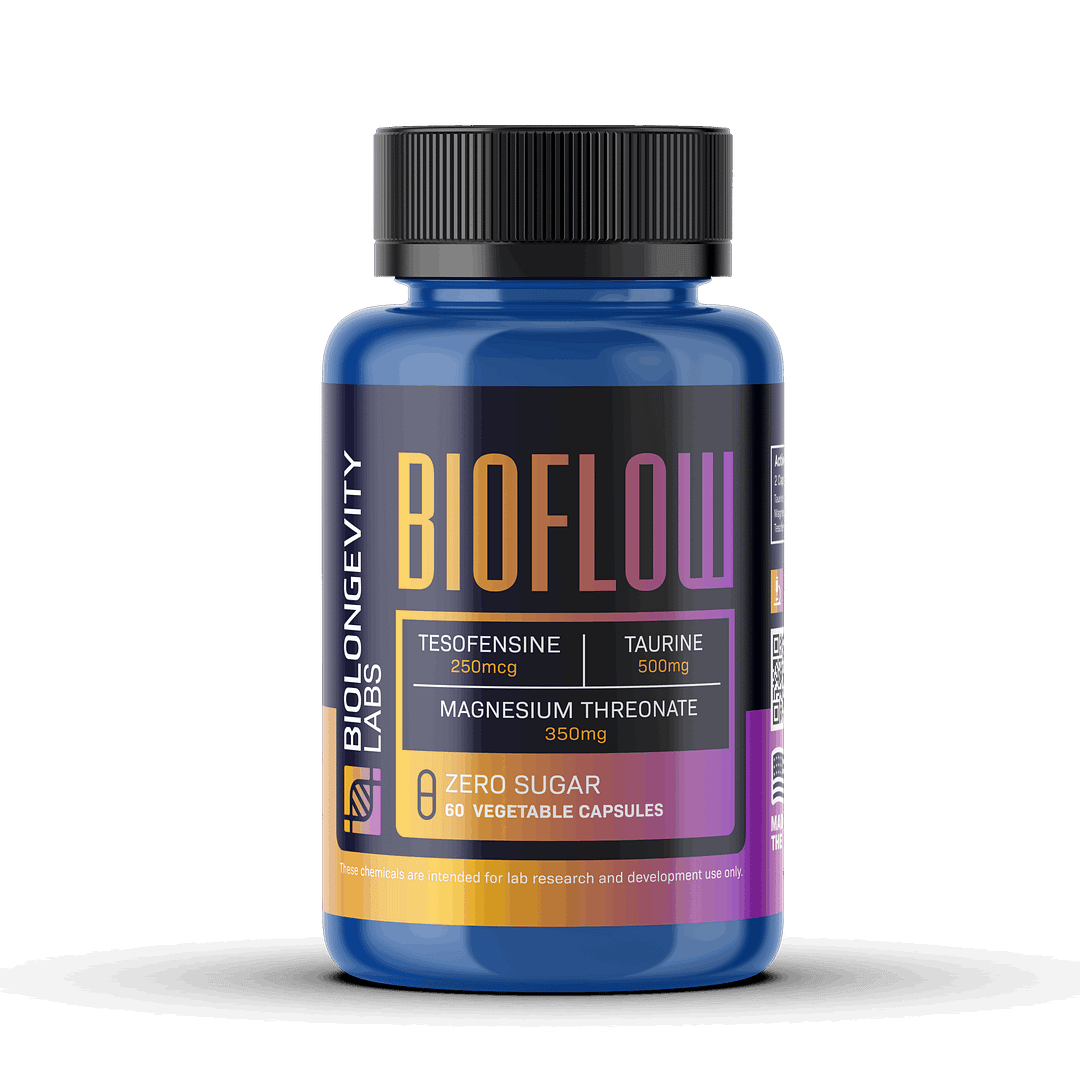
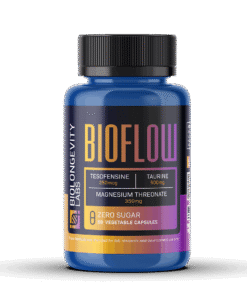
BioFlow
As an integrated research formula, BioFlow:
- Suppresses appetite and promotes weight management via central monoamine modulation.
- Enhances vascular endothelial function and supports healthy blood pressure.
- Improves learning, memory, and synaptic plasticity by elevating brain magnesium levels.
These complementary ingredients make BioFlow a promising candidate for studies targeting obesity, cardiovascular wellness, and cognitive aging.
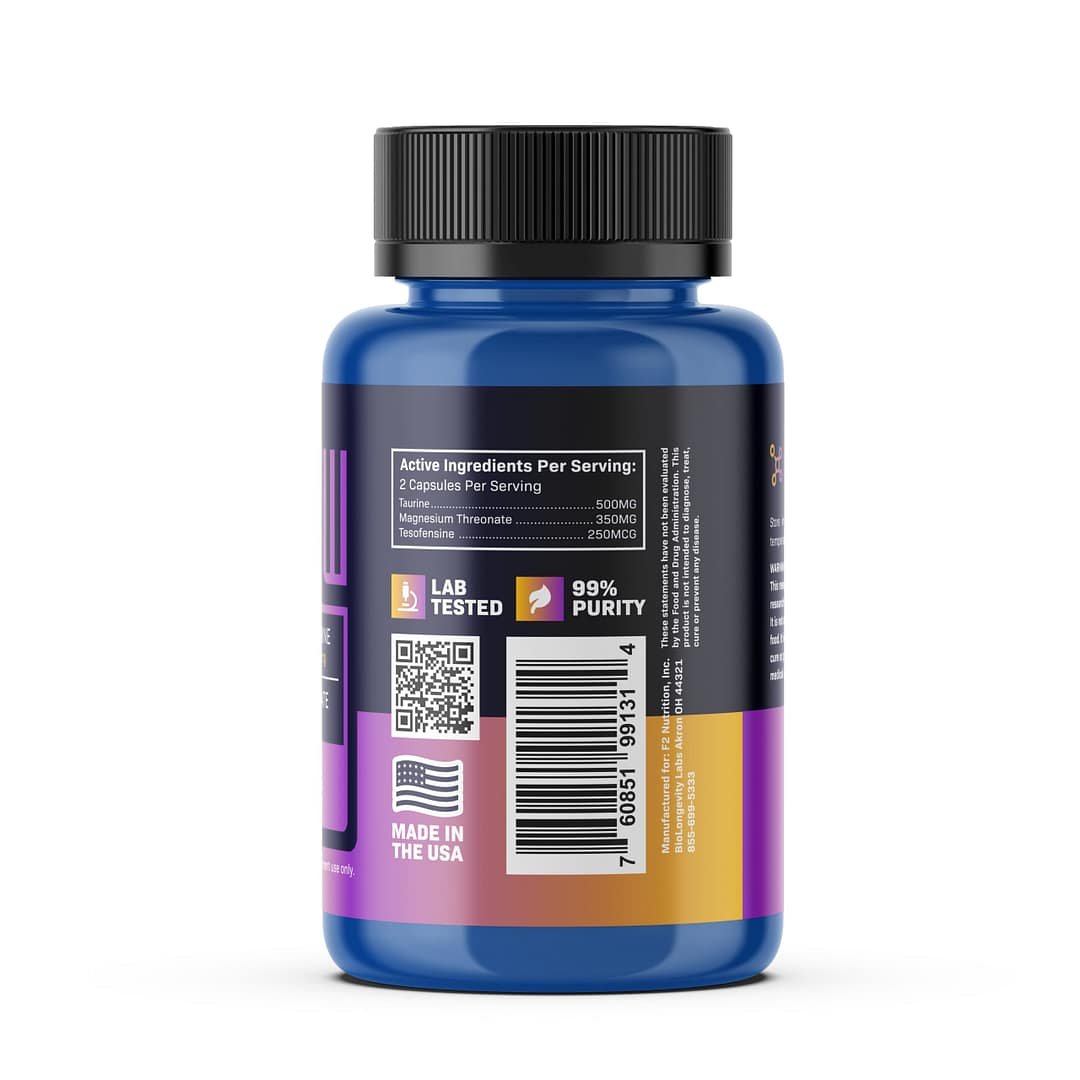
BioFlow Ingredients (per capsule)
| Ingredient | Dose | Key Actions |
| Tesofensine | 250 mcg | Triple monoamine reuptake inhibition; appetite suppression [1] |
| Taurine | 500 mcg | Antioxidant and endothelial protector; improves FMD [2] |
| Magnesium L-threonate | 350 mcg | Elevates brain Mg²⁺; enhances synaptic plasticity & memory [3] |
Research Areas
- Appetite Regulation & Weight Management
- Vascular Endothelial Function
- Cognitive Enhancement & Memory
- Neuroprotection in Aging Models
Metabolic Syndrome Support
Appetite Suppression & Weight Loss
Tesofensine acts as a potent triple monoamine reuptake inhibitor, reducing food intake and inducing significant weight loss in diet-induced obese rats, in part by normalizing forebrain dopamine levels [1].
Vascular Endothelial Support
In young adults with early vascular dysfunction (e.g., type 1 diabetics), two weeks of taurine supplementation reversed endothelial abnormalities—restoring flow-mediated dilation and arterial stiffness to control levels [2].
Cognitive Enhancement & Synaptic Plasticity
Magnesium L-threonate (MgT) elevates brain Mg²⁺ concentrations, leading to enhanced learning abilities, working memory, and long-term potentiation in rat models, correlated with increased synaptic density in hippocampal subregions [3].
Neuroprotection in Alzheimer’s Models
In APPswe/PS1dE9 transgenic mice, MgT treatment reduced Aβ plaque burden, prevented synapse loss, and rescued memory deficits by stabilizing NMDA-receptor–CREB signaling even in late-stage pathology [4].
References
- Hansen HH et al. Tesofensine induces appetite suppression and weight loss with reversal of low forebrain dopamine levels in the diet-induced obese rat. Pharmacol Biochem Behav. 2013;110:265–271. https://pubmed.ncbi.nlm.nih.gov/23932919/
- Moloney MA et al. Two weeks taurine supplementation reverses endothelial dysfunction in young male type 1 diabetics. Diab Vasc Dis Res. 2010;7(4):300–310. https://pubmed.ncbi.nlm.nih.gov/20667936/
- Slutsky I et al. Enhancement of learning and memory by elevating brain magnesium. Neuron. 2010;65(2):165–177. https://pubmed.ncbi.nlm.nih.gov/20152124/
- Liu G et al. Elevation of brain magnesium prevents and reverses cognitive deficits and synaptic loss in Alzheimer’s disease mouse model. J Neurosci. 2013;33(10):3815–3827. https://pubmed.ncbi.nlm.nih.gov/23658180/
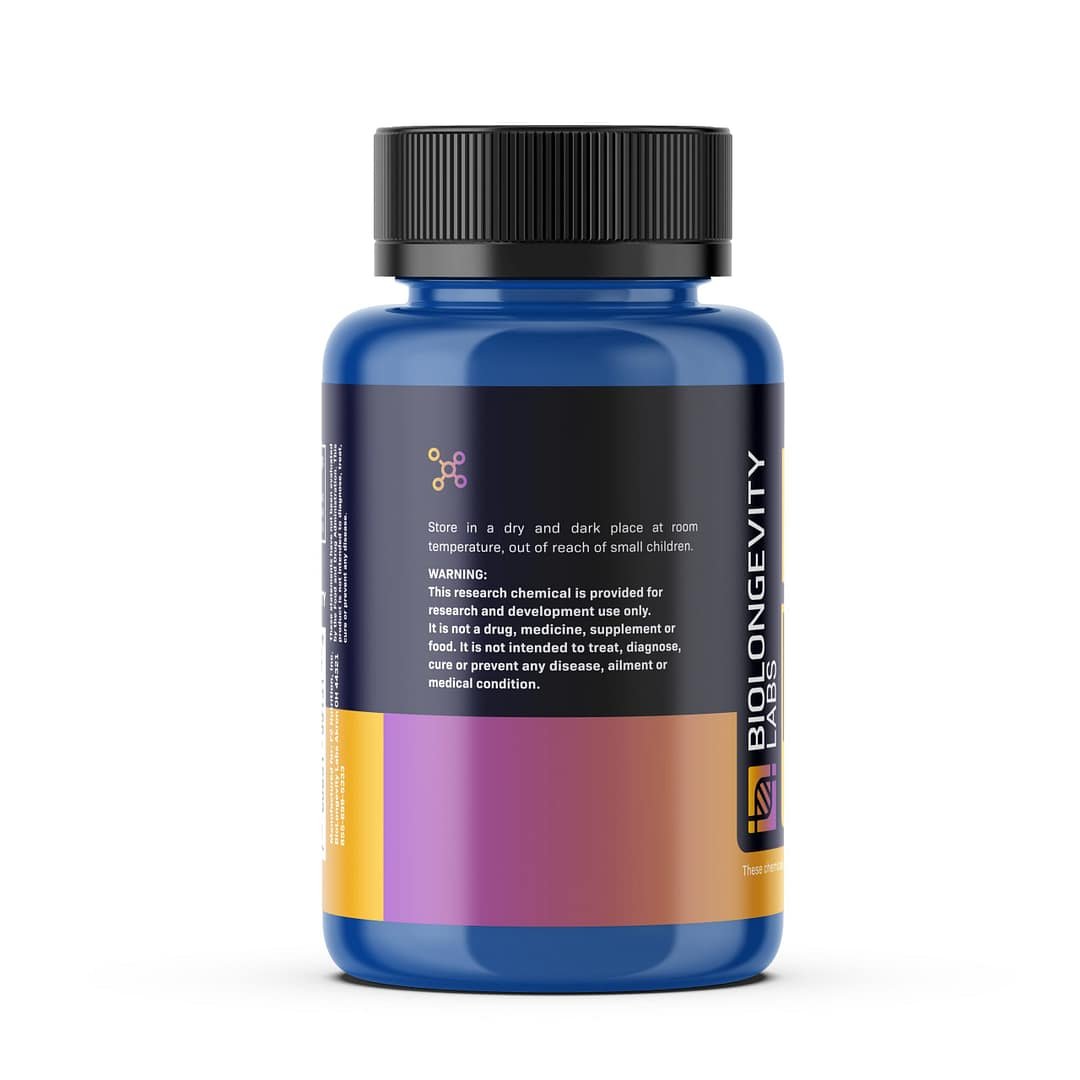
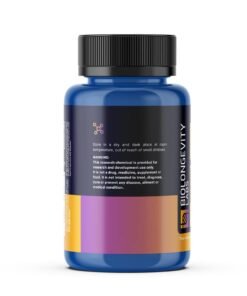
Note: BioFlow is formulated for investigational research use only and is not approved for diagnostic or therapeutic applications in humans or animals.
Endotoxin BioFlow
 ×
×
Disclaimer: For Research Purposes Only
This content is provided strictly for research purposes and does not constitute an endorsement or recommendation for the non-laboratory application or improper handling of peptides designed for research. The information, including discussions about specific peptides and their researched benefits, is presented for informational purposes only and must not be construed as health, clinical, or legal guidance, nor an encouragement for non-research use in humans. Peptides described here are solely for use in structured scientific study by authorized individuals. We advise consulting with research experts, medical practitioners, or legal counsel prior to any decisions about obtaining or utilizing these peptides. The expectation of responsible, ethical utilization of this information for legitimate investigative and scholarly objectives is paramount. This notice is dynamic and governs all provided content on research peptides. . .
Related products
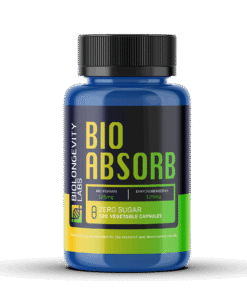
Peptide Capsules