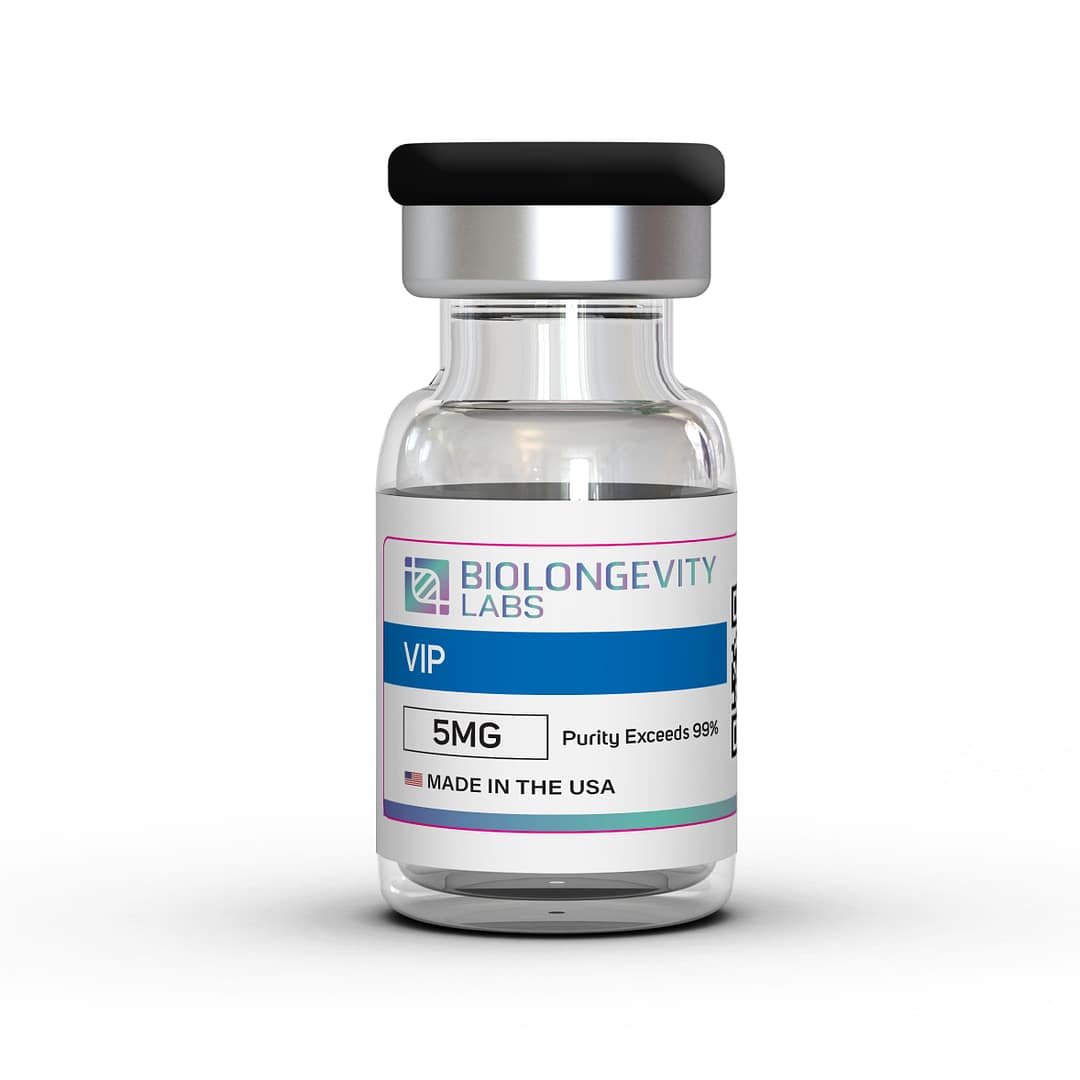
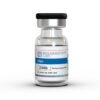
Buy VIP (Vasoactive Intestinal Peptide) (5mg)
VIP (Vasoactive Intestinal Peptide) Description
Vasoactive intestinal peptide (VIP) is a 28-amino acid regulatory hormone that controls smooth muscle relaxation and secretion processes throughout various biological systems. This research-grade peptide allows laboratories to investigate VIP’s role in cellular signaling, vascular function, and therapeutic pathways through controlled in vitro studies.
Our pharmaceutical-grade VIP maintains high purity standards for reliable research outcomes. Each batch undergoes rigorous testing to support accurate scientific investigations of this important regulatory peptide’s mechanisms and potential therapeutic applications in laboratory research use settings.
Each vial contains 5 mg of lyophilized VIP. Reconstitute immediately before research use in bacteriostatic water, aliquot single-use, and store at ≤ –20 °C to avoid repeated freeze–thaw cycles.
Peptide Information
| Property | Value |
|---|---|
| Peptide Sequence | His-Ser-Asp-Ala-Val-Phe-Thr-Asp-Asn-Tyr-Thr-Arg-Leu-Arg-Lys-Gln-Met-Ala-Val-Lys-Lys-Tyr-Leu-Asn-Ser-Ile-Leu-Asn-NH2 |
| Molecular Formula | C147H238N44O42S |
| Molecular Weight | 3325.8 g/mol |
| CAS Number | 40077-57-4 |
| PubChem CID | 53314964 |
| Synonyms | VIP, Aviptadil, Vasoactive Intestinal Polypeptide, Vasoactive Intestinal Peptide |
Lyophilized Peptides:
These peptides are freeze-dried, a process that not only extends shelf life but also preserves the purity and integrity of the peptides during storage. We do not use any fillers in this process.
Product Usage:
This PRODUCT IS INTENDED AS A RESEARCH CHEMICAL ONLY. This designation allows the use of research chemicals strictly for in vitro testing and laboratory experimentation only. All product information available on this website is for educational purposes only. This product should only be handled by licensed, qualified professionals. This product is not a drug, food, or cosmetic and may not be misbranded, misused or mislabeled as a drug.
VIP Research
VIP research spans multiple biological systems, offering laboratories diverse opportunities to study this 28-amino acid peptide’s regulatory mechanisms.
Cardiovascular Research
VIP acts as a potent vasodilator by binding to VPAC receptors and increasing nitric oxide production. Laboratory studies show VIP influences coronary blood flow and heart rate regulation through its presence in cardiac nerve fibers[1].
Digestive System Studies
Research demonstrates VIP’s role in gut motility regulation through smooth muscle relaxation in the esophageal sphincter and stomach. The peptide stimulates pancreatic secretion of water and electrolytes while inhibiting gastric acid production[2].
Immune System Investigations
VIP exhibits anti-inflammatory properties by binding to VPAC1 and VPAC2 receptors on immune cells. Studies show the peptide inhibits T-cell proliferation and suppresses inflammatory cytokine production from macrophages and microglia[3].
Neurological Research
Laboratory investigations reveal VIP’s neuroprotective effects on dopaminergic neurons through microglial modulation. The peptide plays a central role in circadian rhythm regulation via VPAC2 receptor activation in the suprachiasmatic nucleus[4].
Receptor Mechanisms
VIP research focuses on VPAC1 and VPAC2 receptor interactions that trigger adenylate cyclase activation and cAMP elevation[5]. These signaling cascades activate protein kinase A pathways across different cell types[6].
References
- R. Henning, “Vasoactive intestinal peptide: cardiovascular effects,” Oxford University Press (OUP), Jan. 2001. doi: 10.1016/s0008-6363(00)00229-7. https://doi.org/10.1016/s0008-6363(00)00229-7
- M. Iwasaki, Y. Akiba, and J. D. Kaunitz, “Recent advances in vasoactive intestinal peptide physiology and pathophysiology: focus on the gastrointestinal system,” F1000 Research Ltd, Sep. 2019. doi: 10.12688/f1000research.18039.1. https://doi.org/10.12688/f1000research.18039.1
- C. Martínez et al., “A Clinical Approach for the Use of VIP Axis in Inflammatory and Autoimmune Diseases,” MDPI AG, Dec. 2019. doi: 10.3390/ijms21010065. https://doi.org/10.3390/ijms21010065
- J. Fahrenkrug, “Transmitter Role of Vasoactive Intestinal Peptide,” Wiley, Jun. 1993. doi: 10.1111/j.1600-0773.1993.tb01344.x. https://doi.org/10.1111/j.1600-0773.1993.tb01344.x
- I. Langer, “Mechanisms involved in VPAC receptors activation and regulation: lessons from pharmacological and mutagenesis studies,” Frontiers Media SA, 2012. doi: 10.3389/fendo.2012.00129. https://doi.org/10.3389/fendo.2012.00129
- I. Kato et al., “Transgenic mice overexpressing human vasoactive intestinal peptide (VIP) gene in pancreatic beta cells. Evidence for improved glucose tolerance and enhanced insulin secretion by VIP and PHM-27 in vivo.,” Journal of Biological Chemistry, vol. 269 33, pp. 21223–8, 1994.
VIP (12085)

Endotoxin VIP

VIP (11369)

VIP (251535)

VIP (251535E)
 ×
×
Disclaimer: For Research Purposes Only
This content is provided strictly for research purposes and does not constitute an endorsement or recommendation for the non-laboratory application or improper handling of peptides designed for research. The information, including discussions about specific peptides and their researched benefits, is presented for informational purposes only and must not be construed as health, clinical, or legal guidance, nor an encouragement for non-research use in humans. Peptides described here are solely for use in structured scientific study by authorized individuals. We advise consulting with research experts, medical practitioners, or legal counsel prior to any decisions about obtaining or utilizing these peptides. The expectation of responsible, ethical utilization of this information for legitimate investigative and scholarly objectives is paramount. This notice is dynamic and governs all provided content on research peptides. . .
Related products
Peptides