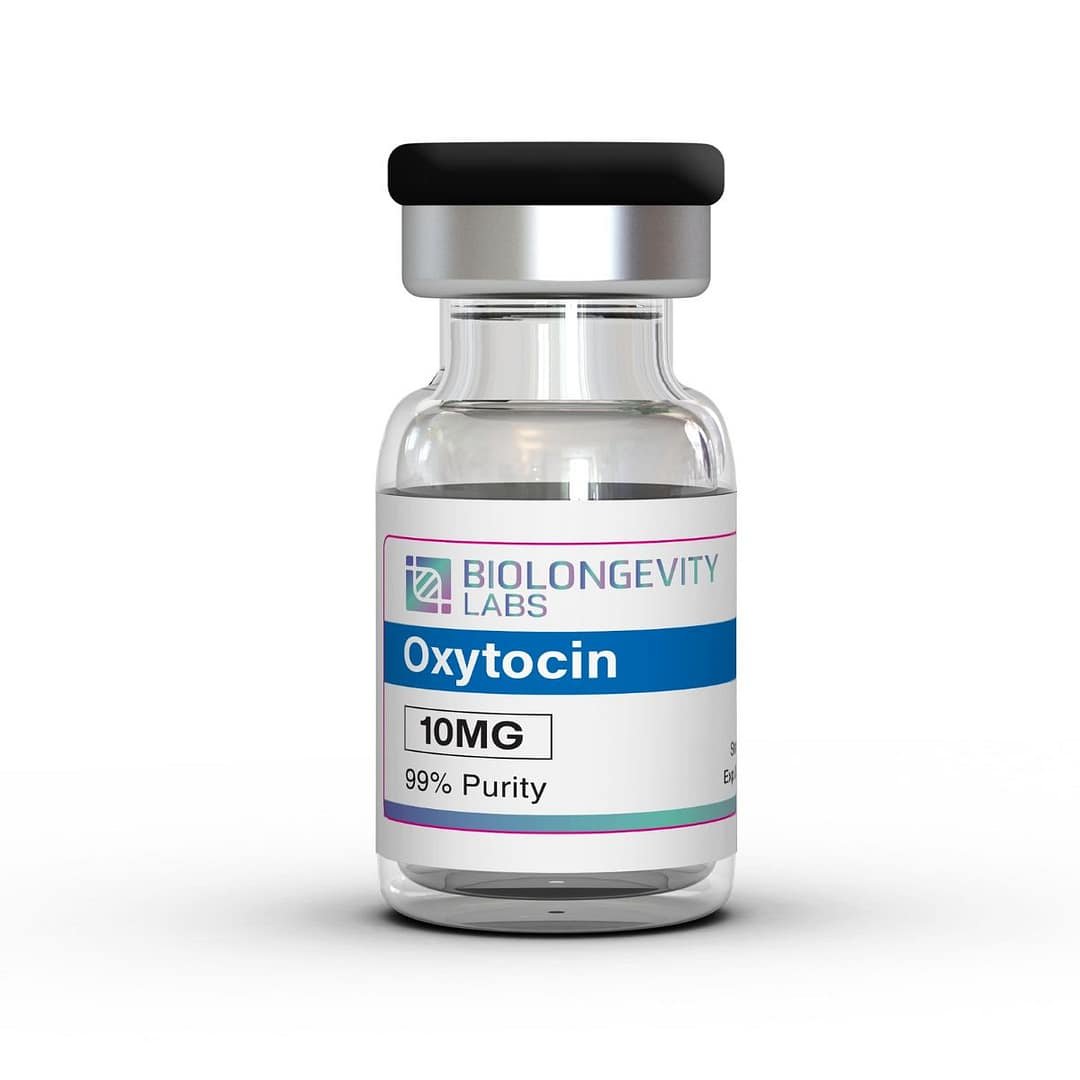
Buy Oxytocin (10mg)
Oxytocin Product Description
Oxytocin is a hormone produced in the hypothalamus that stimulates uterine contractions during childbirth and milk ejection during breastfeeding. It is often called the “love hormone” because research shows it promotes social bonding, trust, and emotional attachment. The neuropeptide functions as both a hormone and neurotransmitter, influencing various social behaviors and biological processes in laboratory studies.
The classification of oxytocin as solely a neurohypophysial hormone is becoming increasingly outdated as scientific understanding evolves. Contemporary research demonstrates that oxytocin functions more accurately as a multifaceted signaling peptide with both central and peripheral actions.
Peptide Information
| Property | Value |
|---|---|
| Peptide Sequence | Cys-Tyr-Ile-Gln-Asn-Cys-Pro-Leu-Gly-NH2 (disulfide bridge: 1-6) |
| Molecular Formula | C43H66N12O12S2 |
| Molecular Weight | 1007.2 g/mol |
| CAS Number | 50-56-6 |
| PubChem CID | 439302 |
| Synonyms | Endopituitrina, Ocytocin, Oxytocinum, Orasthin |
Oxytocin Peptide Structure
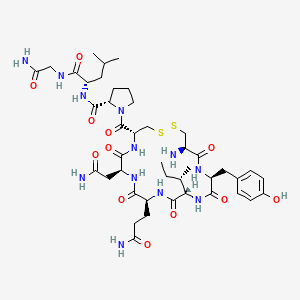
Source: PubChem
Lyophilized Peptides:
These peptides are freeze-dried, a process that not only extends shelf life but also preserves the purity and integrity of the peptides during storage. We do not use any fillers in this process.
Product Usage:
This PRODUCT IS INTENDED AS A RESEARCH CHEMICAL ONLY. This designation allows the use of research chemicals strictly for in vitro testing and laboratory experimentation only. All product information available on this website is for educational purposes only. This product should only be handled by licensed, qualified professionals. This product is not a drug, food, or cosmetic and may not be misbranded, misused or mislabeled as a drug.
Oxytocin Research Applications
Oxytocin presents extensive research opportunities, with established findings in reproduction, social behavior, and emotional regulation pathways. Recent studies have expanded applications to include stress response mechanisms, metabolic pathway research, and psychiatric disorder methodologies.
Oxytocin demonstrates its role as a key modulator of both social and non-social behaviors, with complex, context-dependent effects suitable for diverse research applications.
Reproductive and Physiological Research
Studies demonstrate oxytocin’s essential role in uterine contraction mechanisms, milk let-down pathways, and influence on energy metabolism, thermogenesis, and muscle function. Research shows it acts through a single receptor (OXTR), triggering diverse cellular signaling pathways that affect both brain and peripheral organs[1].
Stress Response and Recovery Research
Research findings indicate oxytocin reduces anxiety-like behaviors and stress-induced physiological responses[2].
While observations show oxytocin may not always reduce initial stress reactivity, higher oxytocin levels correlate with faster recovery of autonomic function (e.g., vagal tone) after stress exposure, suggesting research opportunities in resilience and recovery mechanisms rather than stress reactivity buffering[2].
Social interaction studies that increase oxytocin release demonstrate reduced behavioral and hormonal stress responses, an effect mediated by oxytocin in hypothalamic research[3].
Social and Emotional Behavior Research
Studies show oxytocin promotes maternal care, pair bonding, and social memory across species models. Research demonstrates its essential role in nurturing, attachment, and conspecific recognition pathways[4].
Oxytocin research reveals anxiolytic and anti-stress effects, particularly in amygdala and hypothalamus studies, with involvement in emotional response regulation including trust, empathy, and moral emotion pathways[5].
Wound Healing Research
Laboratory findings demonstrate oxytocin reduces inflammation and oxidative stress, as shown by decreased levels of TNF-α, MMP-2, PTX3, and malondialdehyde, and increased TIMP-2 in oral ulcer research models. This modulation supports better tissue organization and faster healing research opportunities, likely through the MMP-2/TIMP-2 pathway and extracellular matrix remodeling investigations[6].
Research studies show oxytocin, upregulated by certain gut microbes, activates regulatory T cells (CD4+Foxp3+CD25+), which can transfer wound-healing capacity in laboratory models, highlighting gut-brain-immune axis research applications[7].
Allostatic Regulation
Laboratory investigations demonstrate oxytocin enables organisms to anticipate and adjust to future environmental changes, rather than merely reacting to disturbances. Research applications include shifting physiological set-points and behavioral modulation studies to maintain stability in dynamic conditions[8].
Oxytocin research facilitates the processing of both social and non-social cues, supporting learning, prediction, and flexible response studies essential for survival research in changing environments[8].
Psychiatric Disorder Research
Oxytocin has been investigated for research applications in autism spectrum disorder, schizophrenia, mood disorders (including depression and bipolar disorder), anxiety disorders, PTSD, eating disorders, and borderline personality disorder studies[9].
Laboratory investigations of exogenous oxytocin show potential for improving social functioning research, reducing stress markers, and alleviating psychiatric symptom studies, though effects are often small and context-dependent in research findings[9].
Metabolic Effects of Oxytocin
Laboratory studies demonstrate oxytocin enhances insulin secretion, especially under high glucose conditions, partly by promoting intra-islet GLP-1 secretion, supporting glucose control research investigations[10]. It improves β-cell responsivity and glucose tolerance in study models by increasing early insulin and C-peptide responses to glucose[11].
Oxytocin increases glucose uptake and lipid utilization in adipose tissue and skeletal muscle research models, contributing to improved insulin sensitivity and reduced fat accumulation studies[12].
Oxytocin reduces the expression of genes linked to appetite and gluconeogenesis, such as FBN1 and PEPCK, further supporting metabolic research applications[13].
Studies of intranasal oxytocin led to weight loss observations and reversal of prediabetic changes, while in mouse models, oxytocin and its analogs reversed insulin resistance and glucose intolerance, independent of weight loss[14].
References:
- Jurek, B., & Neumann, I. (2018). The Oxytocin Receptor: From Intracellular Signaling to Behavior.. Physiological reviews, 98 3, 1805-1908 . https://doi.org/10.1152/physrev.00031.2017.
- Onaka, T., & Takayanagi, Y. (2021). Roles of Oxytocin in Stress Responses, Allostasis and Resilience. International Journal of Molecular Sciences, 23. https://doi.org/10.3390/ijms23010150.
- Wang, Z., & Smith, A. (2014). Hypothalamic Oxytocin Mediates Social Buffering of the Stress Response. Biological Psychiatry, 76, 281-288. https://doi.org/10.1016/j.biopsych.2013.09.017.
- Neumann, I. (2008). Brain Oxytocin: A Key Regulator of Emotional and Social Behaviours in Both Females and Males. Journal of Neuroendocrinology, 20. https://doi.org/10.1111/j.1365-2826.2008.01726.x.
- Kendrick, K., & Yao, S. (2025). How does oxytocin modulate human behavior?. Molecular psychiatry. https://doi.org/10.1038/s41380-025-02898-1.
- Erbaş, O., Bora, E., Zeytinoğlu, M., & Çınaroğlu, O. (2025). Healing with Love: Oxytocin Accelerates Oral Ulcer Recovery by Reducing Inflammation. Journal of Clinical Medicine, 14. https://doi.org/10.3390/jcm14082667.
- Chatzigiagkos, A., Poutahidis, T., Alm, E., Ibrahim, Y., Lakritz, J., Erdman, S., Levkovich, T., Qi, P., Varian, B., & Kearney, S. (2013). Microbial Symbionts Accelerate Wound Healing via the Neuropeptide Hormone Oxytocin. PLoS ONE, 8. https://doi.org/10.1371/journal.pone.0078898.
- Quintana, D., & Guastella, A. (2020). An Allostatic Theory of Oxytocin. Trends in Cognitive Sciences, 24, 515-528. https://doi.org/10.1016/j.tics.2020.03.008.
- Carbone, M., Diep, P., Marazziti, D., & Carter, S. (2022). Oxytocin: An Old Hormone, A Novel Psychotropic Drug And Possible Use In Treating Psychiatric Disorders.. Current medicinal chemistry. https://doi.org/10.2174/0929867329666220727120646.
- Misaka, S., Yokota, S., Tezuka, K., Maejima, Y., Okano, T., Hidema, S., Yamachi, M., Shimizu, M., Fukushima, T., Kanai, K., Hattori, K., & Shimomura, K. (2025). Oxytocin modulates insulin and GLP-1 secretion in pancreatic islets.. Aging, 17. https://doi.org/10.18632/aging.206244.
- Klement, J., Cobelli, C., Lehnert, H., Piccinini, F., Hallschmid, M., Brede, S., Ott, V., & Rapp, K. (2016). Oxytocin Improves β-Cell Responsivity and Glucose Tolerance in Healthy Men. Diabetes, 66, 264 – 271. https://doi.org/10.2337/db16-0569.
- Ding, C., Leow, M., Magkos, F., & Magkos, F. (2018). Oxytocin in metabolic homeostasis: implications for obesity and diabetes management. Obesity Reviews, 20, 22 – 40. https://doi.org/10.1111/obr.12757.
- Embark, H., Cavalu, S., El-Dawy, K., Alamery, S., Batiha, G., Mickdam, E., Fouad, S., Rehan, I., El-Belbasi, H., Al-Amgad, Z., Elnagar, A., Shanab, O., & Youssef, M. (2022). Ameliorative Effect of Oxytocin on FBN1 and PEPCK Gene Expression, and Behavioral Patterns in Rats’ Obesity-Induced Diabetes. Frontiers in Public Health, 10. https://doi.org/10.3389/fpubh.2022.777129.
- Wu, C., Cai, D., Xu, Z., Chen, Q., Zhang, H., Wu, J., & Chen, X. (2013). Treatment of Obesity and Diabetes Using Oxytocin or Analogs in Patients and Mouse Models. PLoS ONE, 8. https://doi.org/10.1371/journal.pone.0061477.
Endotoxin Oxytocin

Oxytocin (11355)

Oxytocin (251518)

Oxytocin (251518E)

Oxytocin(10449)
 ×
×
Disclaimer: For Research Purposes Only
This content is provided strictly for research purposes and does not constitute an endorsement or recommendation for the non-laboratory application or improper handling of peptides designed for research. The information, including discussions about specific peptides and their researched benefits, is presented for informational purposes only and must not be construed as health, clinical, or legal guidance, nor an encouragement for non-research use in humans. Peptides described here are solely for use in structured scientific study by authorized individuals. We advise consulting with research experts, medical practitioners, or legal counsel prior to any decisions about obtaining or utilizing these peptides. The expectation of responsible, ethical utilization of this information for legitimate investigative and scholarly objectives is paramount. This notice is dynamic and governs all provided content on research peptides. . .
Related products