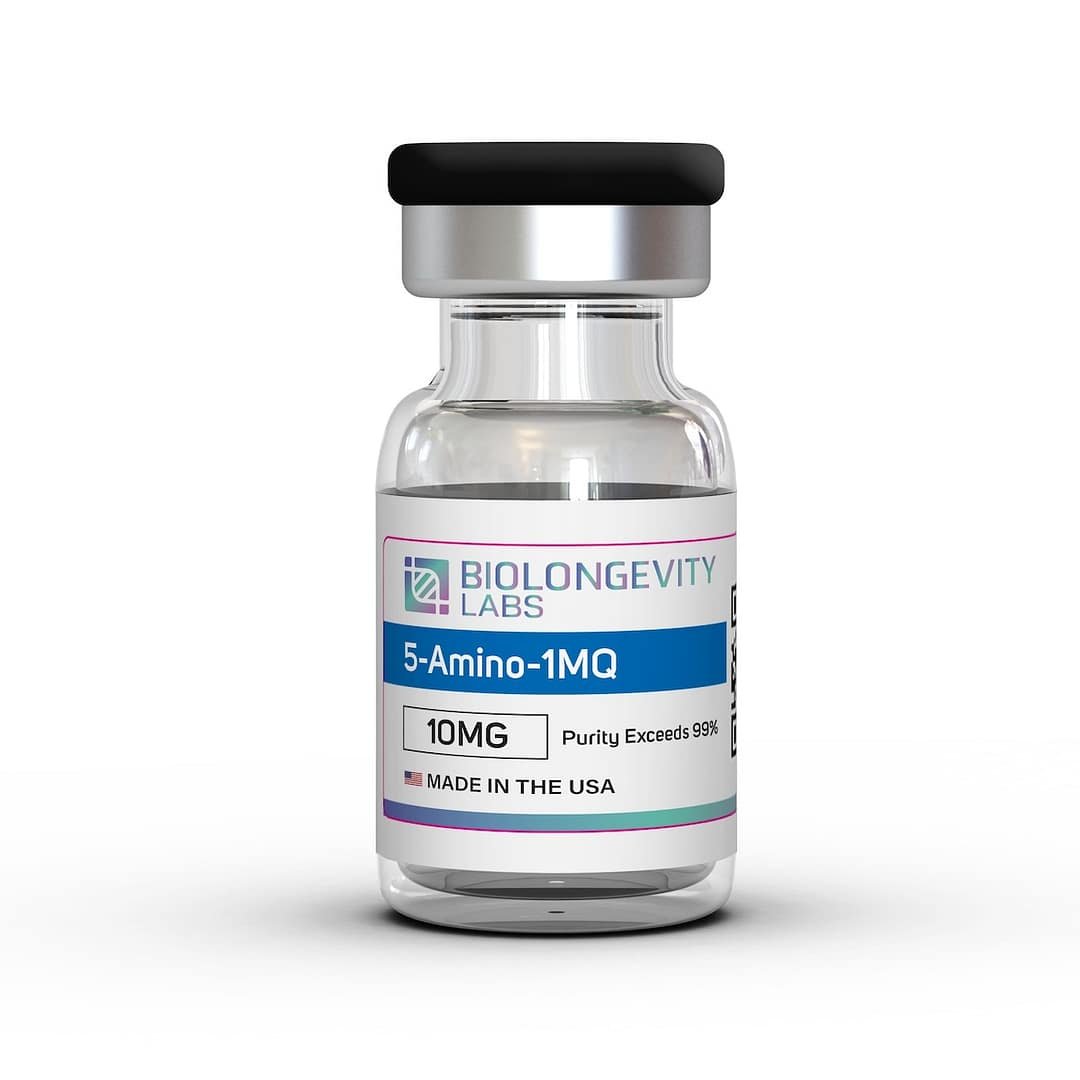
Buy 5-Amino-1MQ (10mg)
5-Amino-1MQ Product Description
5-Amino-1MQ is a synthetic compound that inhibits the enzyme nicotinamide N-methyltransferase (NNMT). By blocking this enzyme, it modulates cellular NAD+ and SAM levels, which affects energy production and fat metabolism pathways in experimental models.
Preclinical research in laboratory settings demonstrates effects on weight-related processes, muscle tissue preservation, mitochondrial function, and cellular aging mechanisms. This methylquinolinium derivative represents a research compound of interest for fundamental studies of metabolic processes and cellular longevity mechanisms.
Peptide Information
| Property | Value |
|---|---|
| Molecular Formula | C10H11N2 |
| Molecular Weight | 159.21 g/mol |
| PubChem CID | 950107 |
| Synonyms | 5-amino-1-methylquinolinium, SCHEMBL6403148, CHEMBL4116828, ZMJBCEIHNOWCMC-UHFFFAOYSA-O, STL196667 |
5-Amino-1MQ Peptide Structure
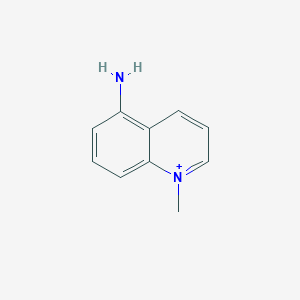
Source: PubChem
Lyophilized Peptides:
These peptides are freeze-dried, a process that not only extends shelf life but also preserves the purity and integrity of the peptides during storage. We do not use any fillers in this process.
Product Usage:
This PRODUCT IS INTENDED AS A RESEARCH CHEMICAL ONLY. This designation allows the use of research chemicals strictly for in vitro testing and laboratory experimentation only. All product information available on this website is for educational purposes only. This product should only be handled by licensed, qualified professionals. This product is not a drug, food, or cosmetic and may not be misbranded, misused or mislabeled as a drug.
5-Amino-1MQ Research
5-Amino-1-methylquinolinium (5-Amino-1MQ) is a small molecule belonging to the class of methylquinolinium derivatives, characterized structurally by a quinolinium core substituted with an amino group at the 5-position and a methyl group at the 1-position.
It is recognized for its potent and selective inhibition of nicotinamide N-methyltransferase (NNMT), an enzyme implicated in a variety of metabolic and oncogenic processes.
Mechanisms of Action
5-Amino-1MQ acts predominantly by inhibiting NNMT, thereby influencing several interconnected metabolic, redox, and epigenetic pathways. NNMT plays a crucial role in the methylation of nicotinamide, affecting intracellular nicotinamide adenine dinucleotide (NAD+) metabolism—a key cellular cofactor for redox reactions, DNA repair, and transcriptional regulation.1
In preclinical studies, treatment of mouse adipocytes with 5-Amino-1MQ resulted in a concentration-dependent increase in NAD+ levels (approximately 1.2 to 1.6-fold higher than controls), which is significant for metabolic homeostasis and cellular health.1
Furthermore, the inhibition of NNMT by 5-Amino-1MQ impacts histone methylation, thereby modulating gene expression programs underlying metabolism and oncogenesis.2
Metabolic and Anti-Obesity Efficacy
In the context of metabolic health disorders, particularly obesity and related syndromes, 5-Amino-1MQ demonstrates remarkable efficacy.3 In diet-induced obesity mouse models, administration of 5-Amino-1MQ led to notable reductions in body weight, white adipose tissue mass, and adipocyte size, without observable adverse effects or changes in food intake.4
This implies its anti-obesity action does not arise from appetite suppression but rather from a direct metabolic modulation mechanism—namely, the suppression of lipogenesis (fat creation).3
These findings highlight the promise of 5-Amino-1MQ as a potential research compound for obesity and possibly type 2 diabetes.4
Applications in Cancer Therapy
Beyond metabolic disease, 5-Amino-1MQ has been explored extensively in preclinical oncology research. Its anticancer activity stems from two principal mechanisms: epigenetic remodeling via altered histone methylation, and direct modulation of cellular energetics and proliferation.2
Studies have shown that, in cancer-associated fibroblasts (CAFs), treatment with 5-Amino-1MQ not only modifies histone methylation patterns but also suppresses tumor-supportive metabolic functions. When applied in animal models, 5-Amino-1MQ has demonstrated the capacity to reduce tumor cell proliferation and alter the tumor microenvironment in favor of therapeutic intervention.2
These dual effects position it as a potential research candidate for both monotherapy and combination strategies in gynecological and potentially other malignancies.
Pharmacokinetics and Pharmacodynamics
While 5-Amino-1MQ exhibits strong biological activity and therapeutic promise, optimization of its pharmacokinetic and pharmacodynamic profiles remains a focus of ongoing research. Its effective cellular permeability and membrane passage have already been demonstrated, which supports its use across a variety of tissue types.3
Further in vitro studies are needed to refine aspects such as tissue-specific targeting, metabolic stability, and elimination, with the aim of maximizing clinical potential and minimizing off-target effects.
References
- Conlon, N., & Ford, D. (2022). A systems-approach to NAD+ restoration.. Biochemical pharmacology, 114946 . https://doi.org/10.1016/j.bcp.2022.114946.
- Myong, S., Nguyen, A., & Challa, S. (2024). Biological Functions and Therapeutic Potential of NAD+ Metabolism in Gynecological Cancers. Cancers, 16. https://doi.org/10.3390/cancers16173085.
- Li, X., Pi, Y., Chen, Y., Zhu, Q., & Xia, B. (2022). Nicotinamide N-Methyltransferase: A Promising Biomarker and Target for Human Cancer Therapy. Frontiers in Oncology, 12. https://doi.org/10.3389/fonc.2022.894744.
- Liu, J., Deng, Z., Zhu, X., Zeng, Y., Guan, X., & Li, J. (2021). Roles of Nicotinamide N-Methyltransferase in Obesity and Type 2 Diabetes. BioMed Research International, 2021. https://doi.org/10.1155/2021/9924314.
5-AMINO-1MQ(251435)
 ×
×
Disclaimer: For Research Purposes Only
This content is provided strictly for research purposes and does not constitute an endorsement or recommendation for the non-laboratory application or improper handling of peptides designed for research. The information, including discussions about specific peptides and their researched benefits, is presented for informational purposes only and must not be construed as health, clinical, or legal guidance, nor an encouragement for non-research use in humans. Peptides described here are solely for use in structured scientific study by authorized individuals. We advise consulting with research experts, medical practitioners, or legal counsel prior to any decisions about obtaining or utilizing these peptides. The expectation of responsible, ethical utilization of this information for legitimate investigative and scholarly objectives is paramount. This notice is dynamic and governs all provided content on research peptides. . .
Related products